You could perhaps say that my engagement with the core research area of Trans-Mediterranean Entanglements (or Transmediterrane Verflechtungen) at the University of Graz started in quite a “Mediterranean” way. In my language, Maltese, we like to say that “kelma ġġib ‘il oħra,” that somehow “one word leads to another.” It started with the inclusion of my chapter on “Elusive Mediterraneans: Reading Beyond Nation” in the prize-winning book, Sea of Literatures: Towards a Theory of Mediterranean Literature (2023), which Steffen Schneider co-edited with Angela Fabris and Albert Göschl.
I found the editorial introduction insightful and when I gave a public lecture on constructing the Mediterranean imaginary at the University of Malta hosted by the Department of English in May 2025 I used it as my theoretical anchor. That led to a continuation of our discussion as co-authors of the volume about some of the main issues raised by the book. During our online conversation on the Mediterranean imaginary and Mediterraneanism, Steffen Schneider invited me to a fellowship at Graz in the context of the Research Area on Mediterranean Entanglements between 20-26 April 2026.
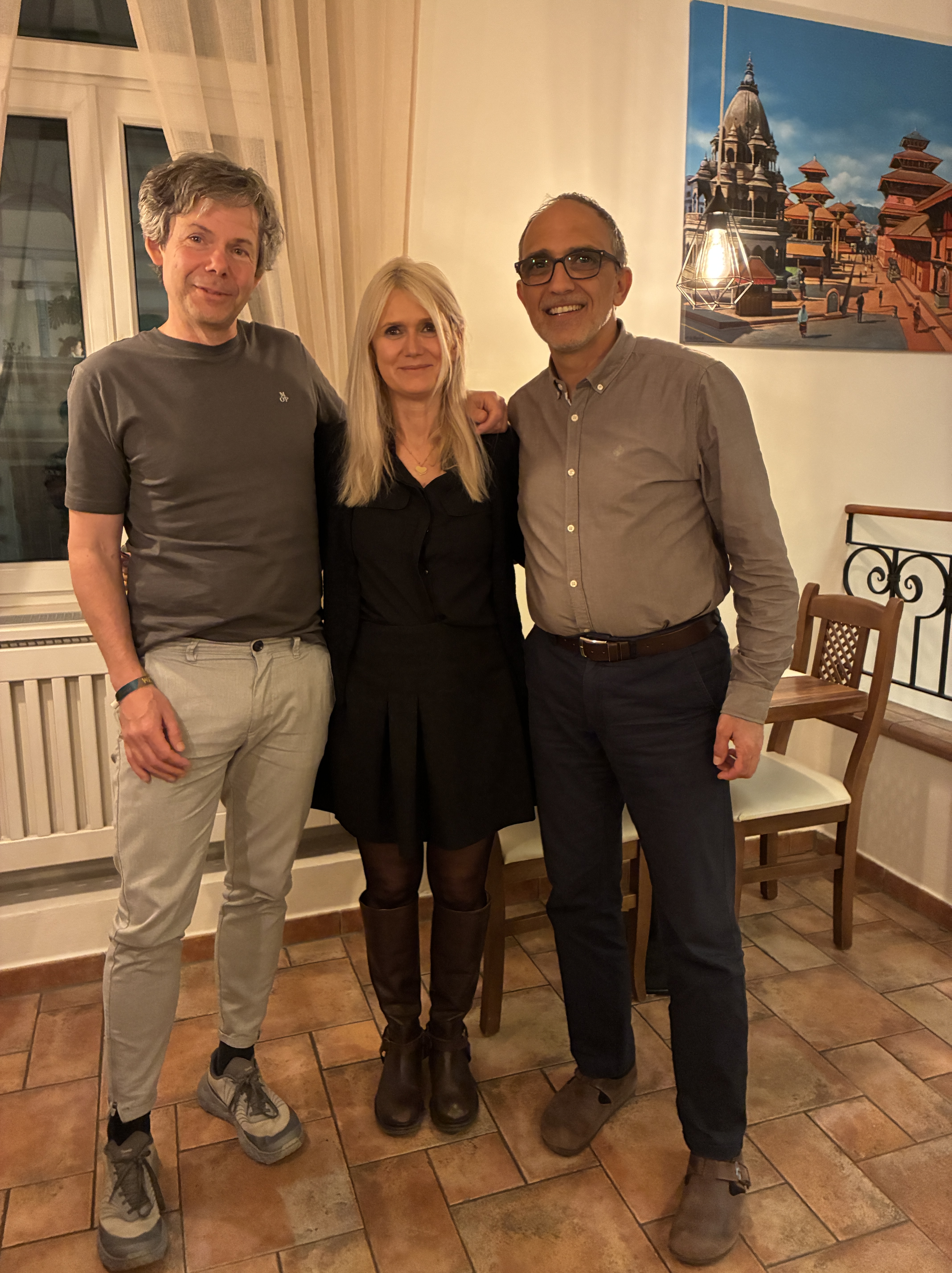
On Tuesday 21 April I met with Prof. Steffen Schneider and Prof. Angela Fabris from Universität Klagenfurt to discuss avenues of collaboration with the general sphere of Mediterranean studies, between myself and the Department of Maltese at the University of Malta and their respective networks.
Doctoral Research
On Wednesday 22 April, I met with doctoral students who are doing research on different aspects of the Mediterranean. While I am particularly interested in how literature in Maltese and other languages construct the Mediterranean in quite explicit ways, as in the case of the novel N’zid by the French writer Malika Mokeddem, Les marins perdus by Jean Claude Izzo, and Cristiani di Allah by Massimo Carlotto, I was particularly interested in how the students engage with the idea of the Mediterranean as a somehow distinct cultural “entity”.
In this context we discussed their various projects, starting with Hannah Barmüller, who coordinated the meeting, about “Eco-aesthetics of Mediterranean Topographies” in 19th century French travelogues. Hannah is examining how these authors aestheticized North African and Levantine landscapes and how their texts intertwine with discourses on the environment (classical ecocriticism, material ecocriticism).
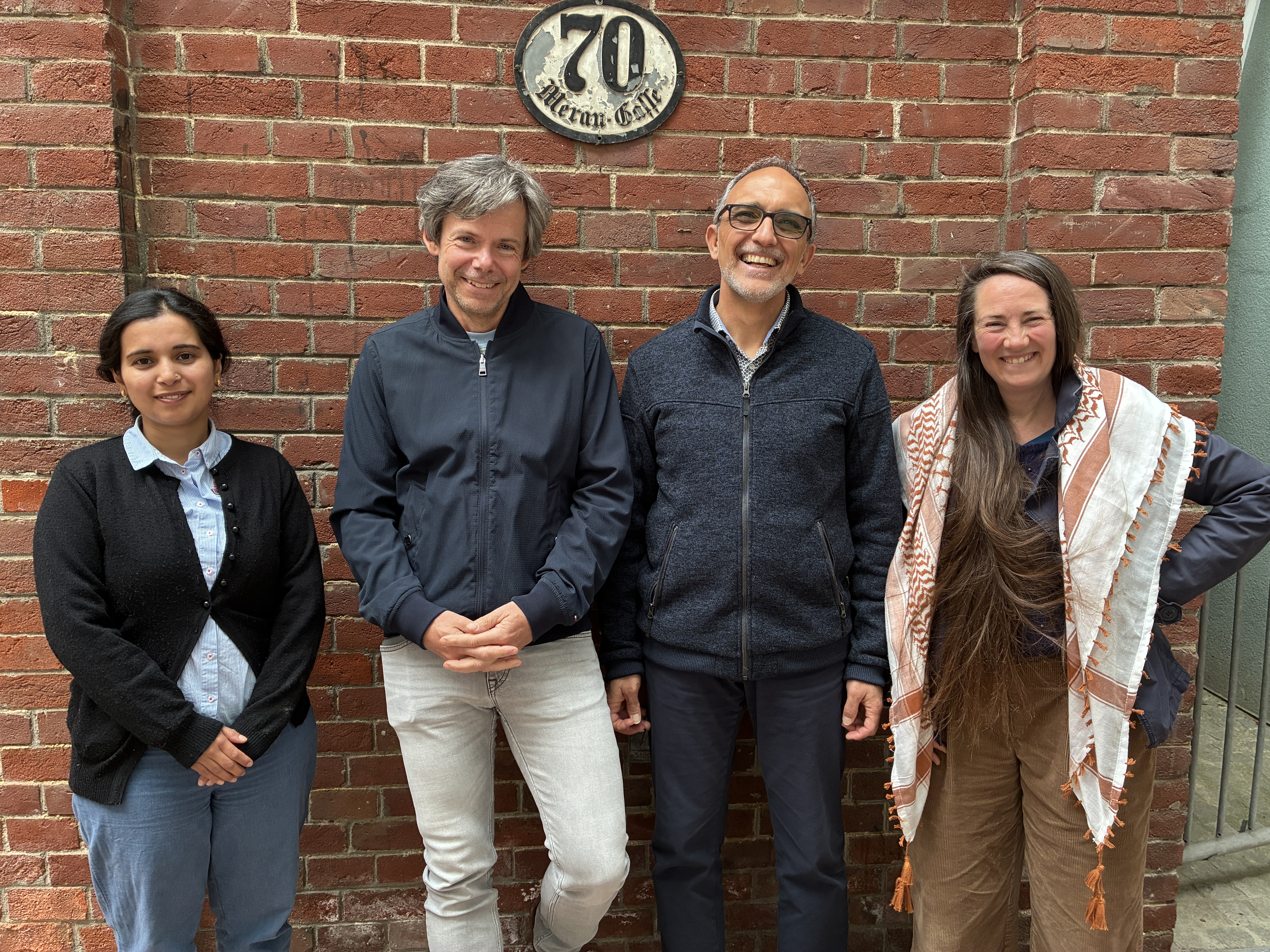
Juliana Reinisch is exploring the representation of the “Orient” and “pagans” in German medieval epic poems and her research focuses on the dynamic entanglements and cultural shifts between the Western-Christian and the Eastern-Islamic spheres. On the other hand, Hans Scherer from Archaeology is investigating the topography and history of the ancient city of Prasiai in the Peloponnese and is combining archaeological excavations and topographical research to analyzes the city’s development. Hans was keen to point out that findings on this excavation site are leading him to evaluate the context, rather than leaning on the context to evaluate the findings on site, and in a way I see this as an interesting microcosm of our engagement of the local with the regional. These are clearly issues that the students are seriously engaged with: A few days before our meeting, Hannah, Juliana and Hans organized a conference in Graz for early career researchers in Mediterranean studies.
We were also joined by Viktoria Kirchner and Pankhuri Bhatt, two researchers from the Department of Romance Studies. Dr Pankhuri Bhatt, who completed her doctorate in March, wrote a thesis that examines the accounts of French travelers on pilgrimages to the sources of the Ganges, offering an eco-critical and eco-poetic analysis of their experiences with nature. Viktoria Kirchner is a pre-doctoral researcher in Spanish Literary Studies whoe work focuses on the representation of temporality within Spanish Conquista narratives.
Negotiating the Mediterranean Imaginary
On Thursday 24 April I gave a talk to colleagues and doctoral students within Trans-Mediterranean Entanglements on “Negotiating the Mediterranean Imaginary: A Planetary Reading of Omar N’Shea’s Es Sidr.“ I examined the representations of the Mediterranean in N’Shea’s book-length personal essay (Aphroconfuso, 2025) against the background of the editorial introduction to Dictionnaire de la Méditerranée (Actes Sud, 2016) and more importantly taking into consideration the planetary dimension as elaborated by Dipesh Chakrabarty in The Climate of History in a Planetary Age (2021) to explore hidden dimensions of the text’s “offstage” geography where now-time slips into deep time. In the discussion after the talk, it was this planetary reading that attracted most of the attention.
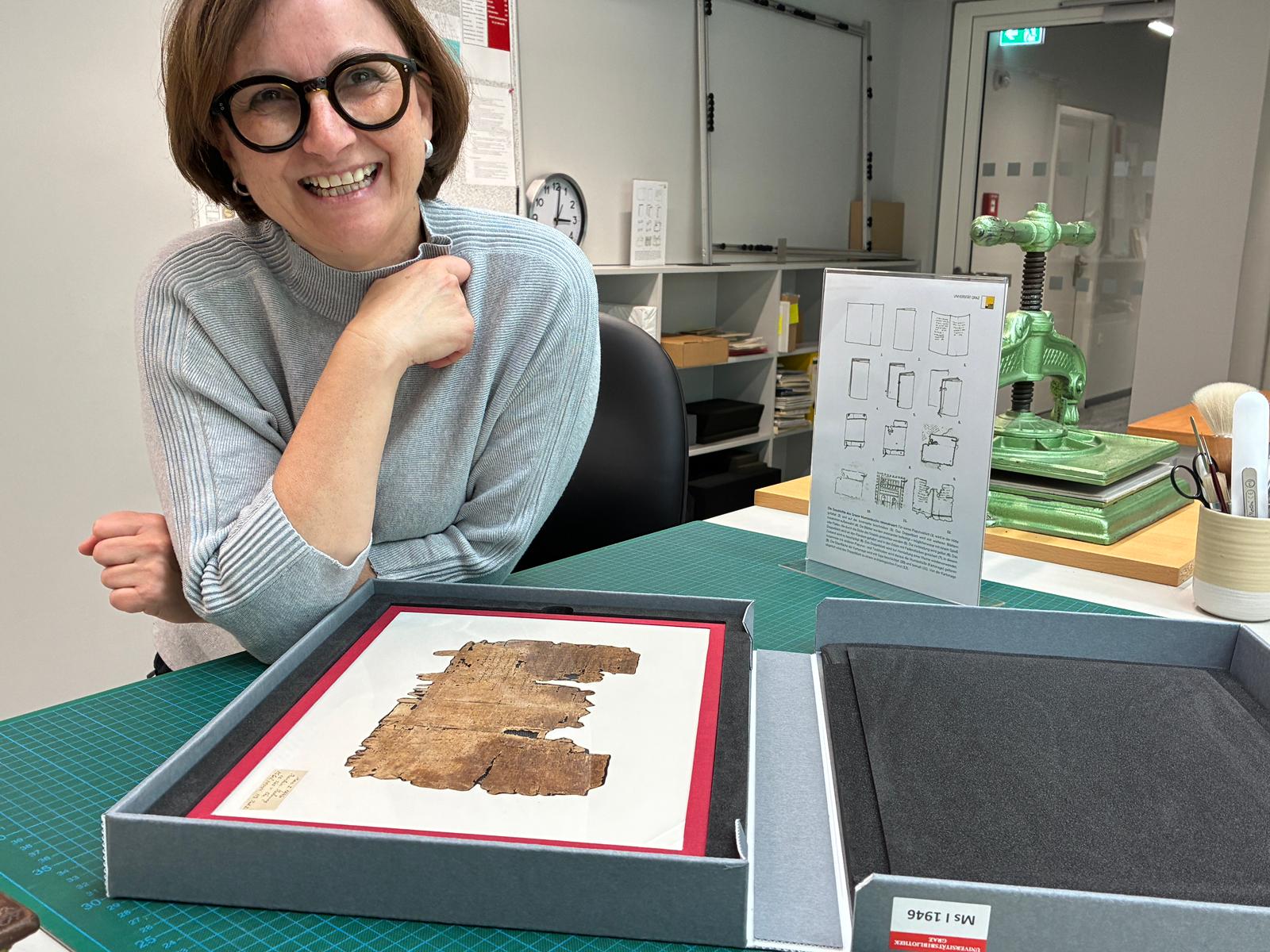
On Friday 25 April, Dr Theresa Zammit Lupi, who carried out conservation of the older document of Maltese literature, the Cantilena, written around the middle of the 15th century, gave me a detailed tour of the Department of Conservation within the Library of Universität Graz, focusing both on the work carried out by her team and possible collaboration with the Department of Maltese.
After my fellowship, I look forward, both a researcher of Mediterranean imaginaries and as head of the Department of Maltese, to further collaboration with Trans-Mediterranean Entanglements and with Universität Graz in general.


