Three amazing days at the Review of Small Literatures, the festival hosted by Booksa in their charming book lounge in the centre of Zagreb. This year the focus was on Maltese literature.
Thanks to Mika and her wonderful team for believing in Maltese poetry and choosing to publish a stylish and searching collection in Croatian. The five poets give a good taste of what so many Maltese poets and publishing.
Thanks for being so welcoming, Mika and Booksa, and for being so professional in the running of the festival, the production of the book, and the questions you asked our poets for the book interviews and during the public events in Zagreb.
Yes, we’d love to continue this collaboration which wouldn’t have started without Alexandra Büchler and Literature Across Frontiers almost twenty years ago.
Five Maltese Poets in Croatian
In early October 2023 I was invited to an annual festival in Zagreb hosted by Booksa called Review of Small Literatures. This year the festival had a special focus on Malta and I was asked by Booksa to make the selection of Maltese writers. Originally the organizers planned to translated eight writers representing different generations and genres and I followed this criterion to identify the Maltese writers. Eventually, from that initial list, the organizers decided to focus on five poets: Leanne Ellul, Gioele Galea, Nadia Mifsud, Karl Schembri, and Murad Shubert.
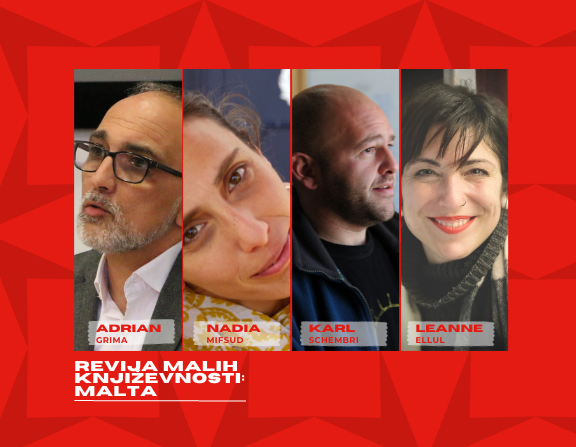
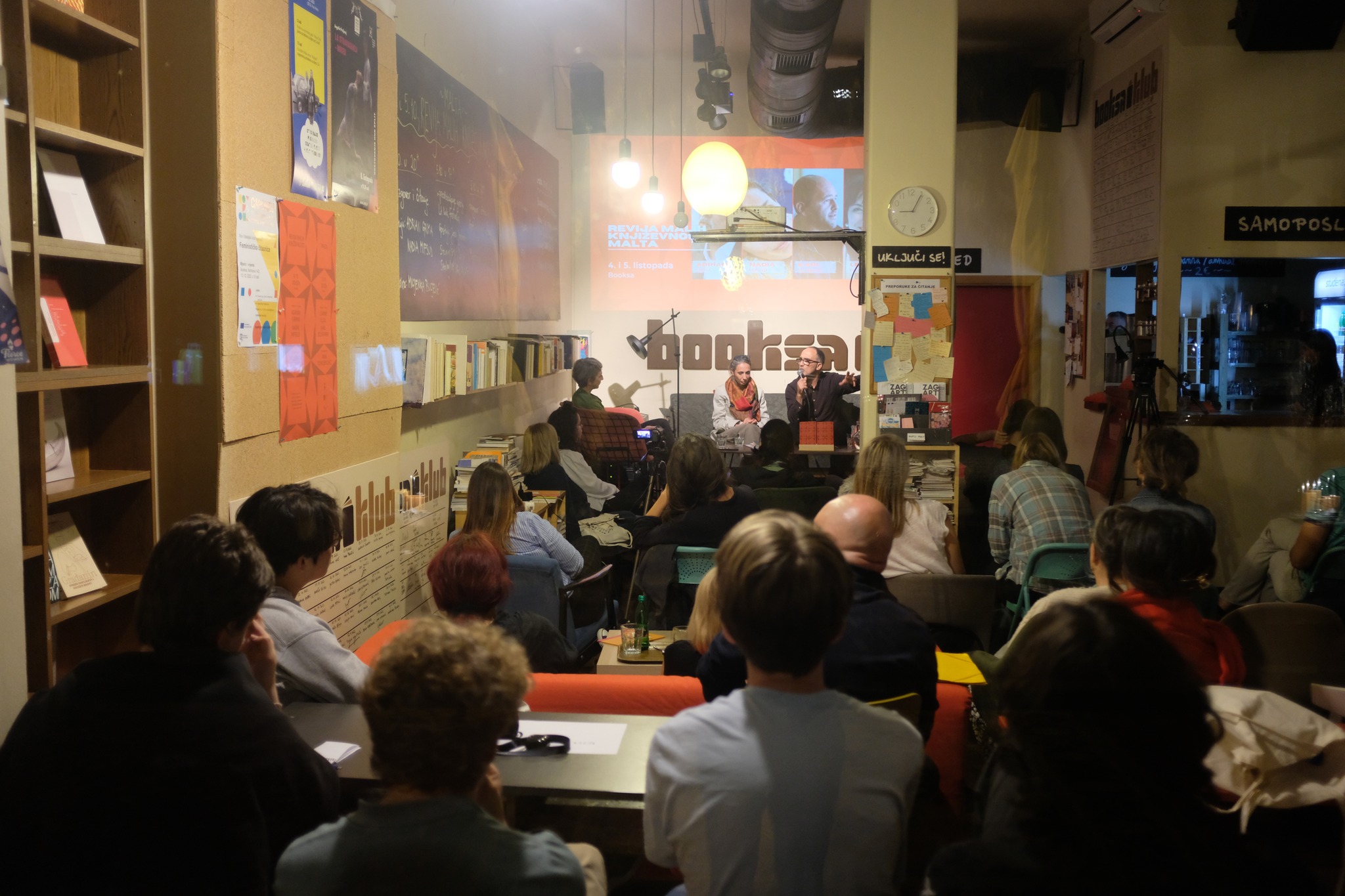
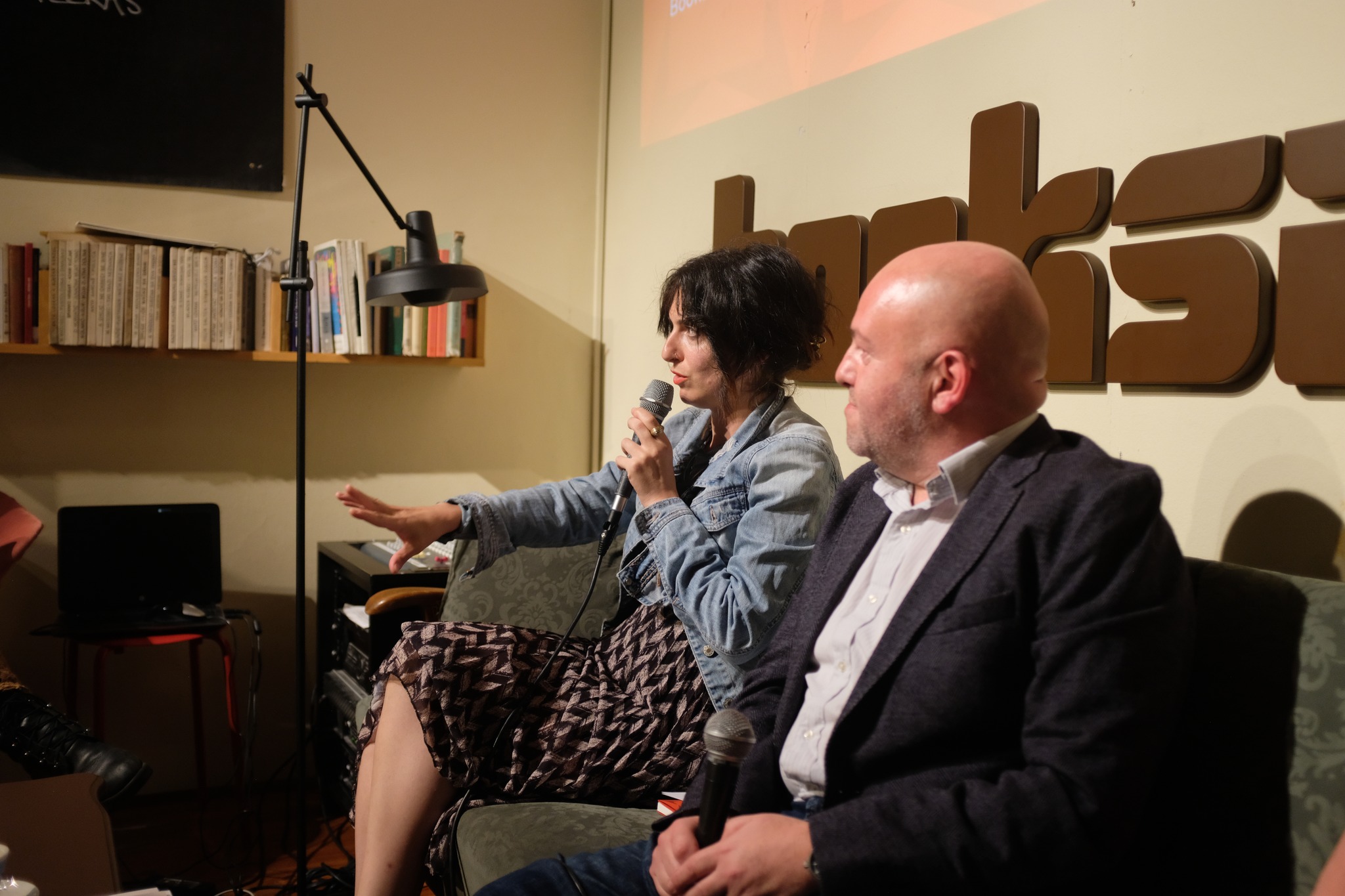
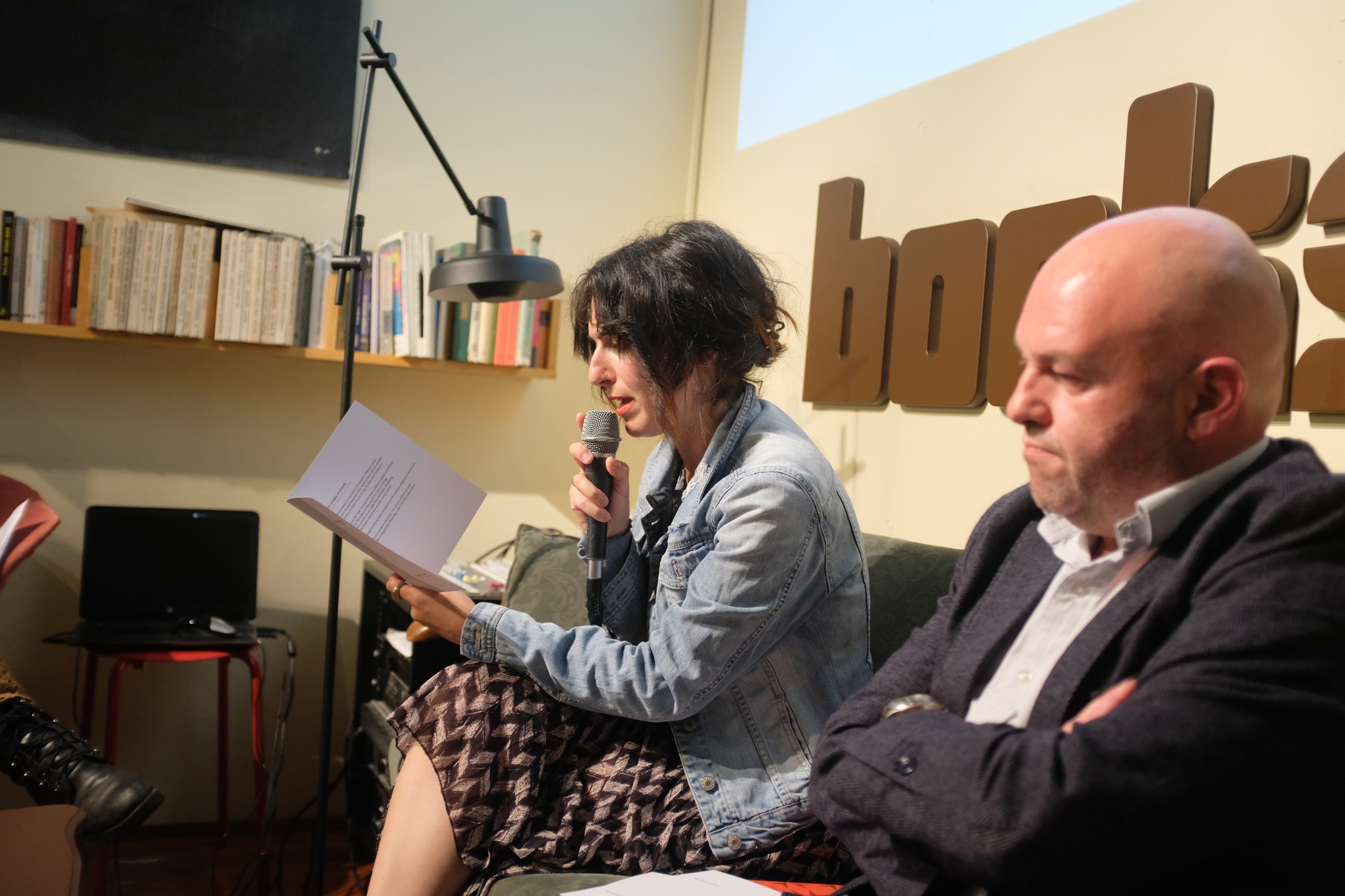
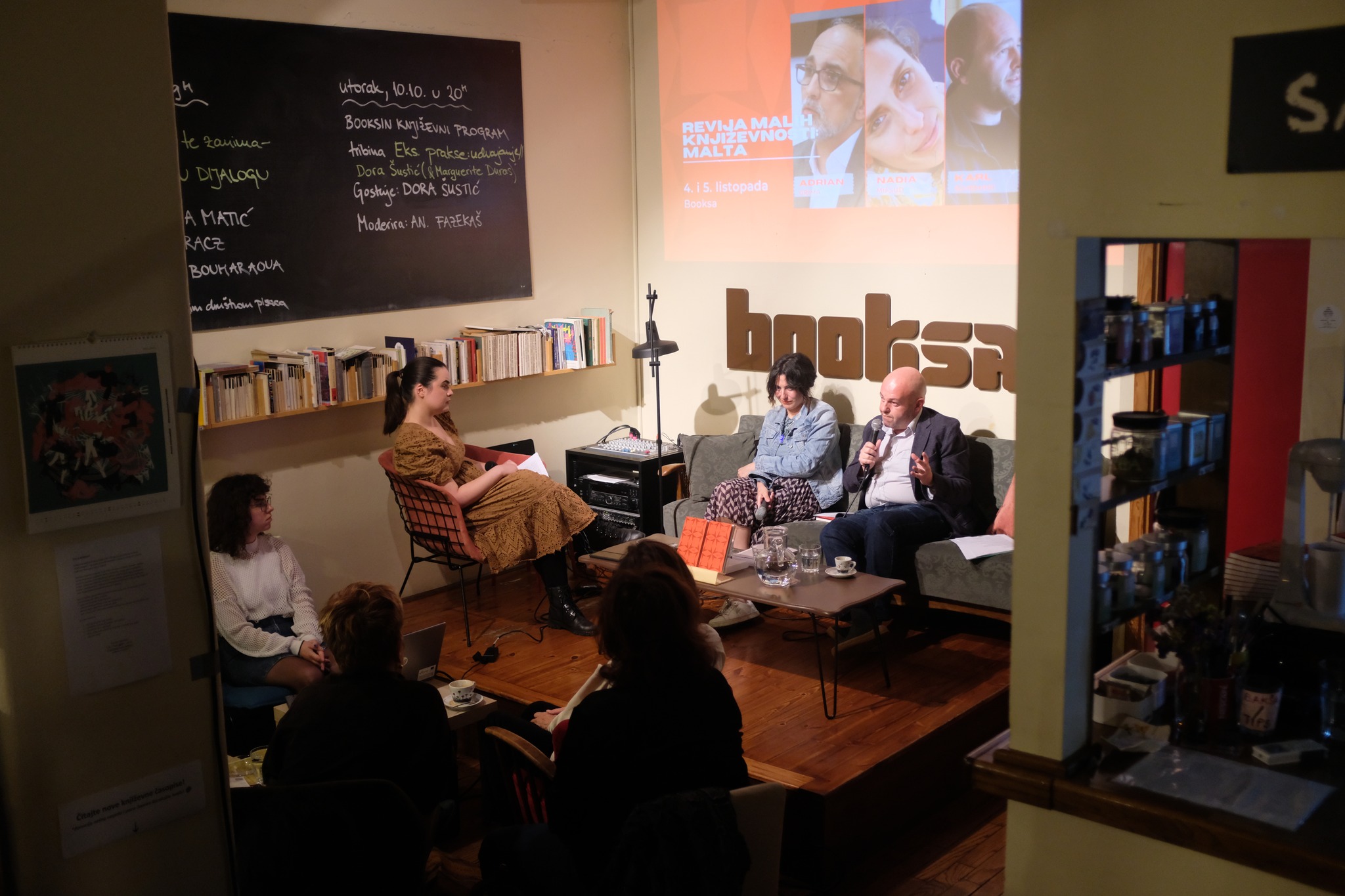
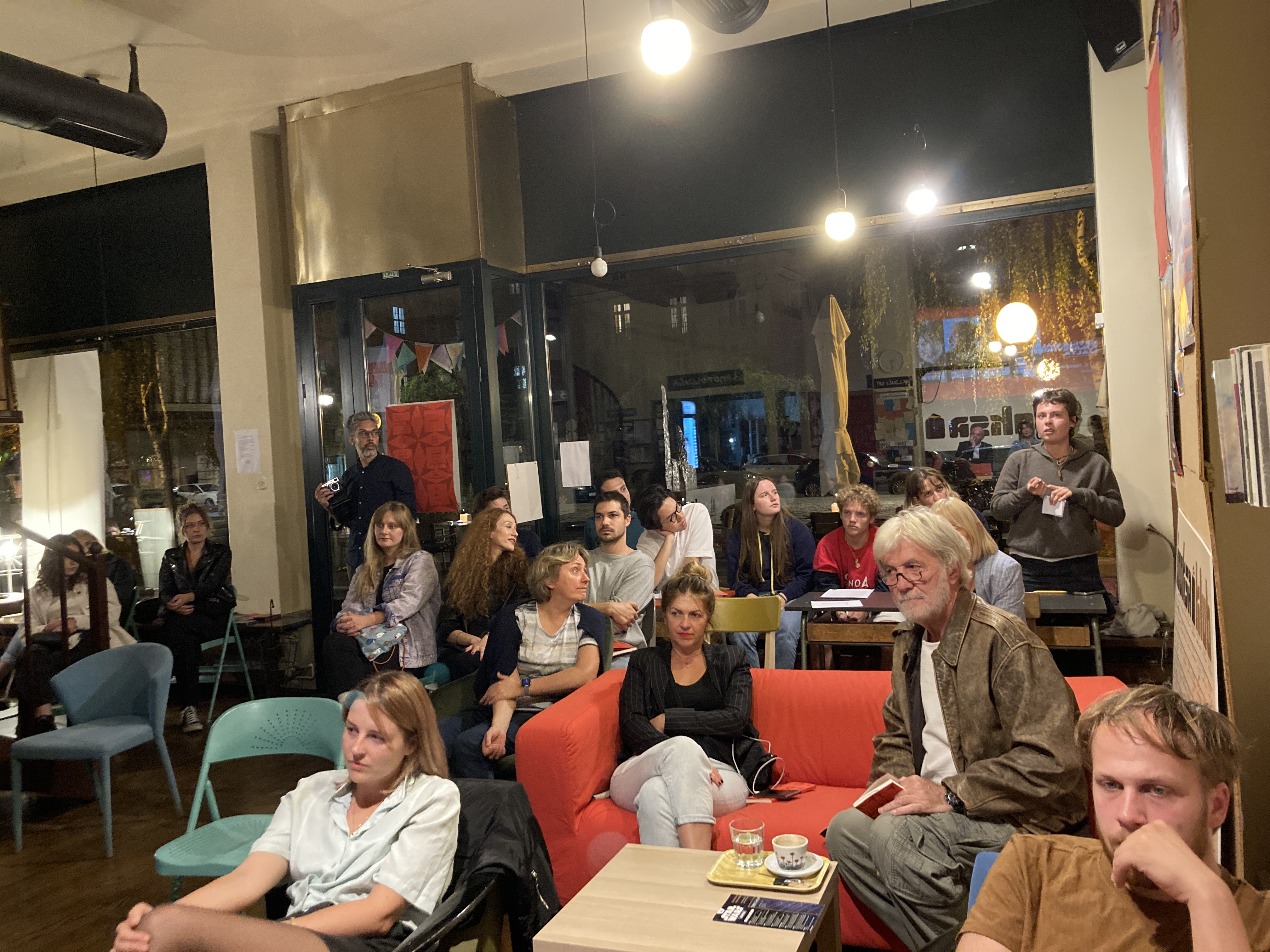
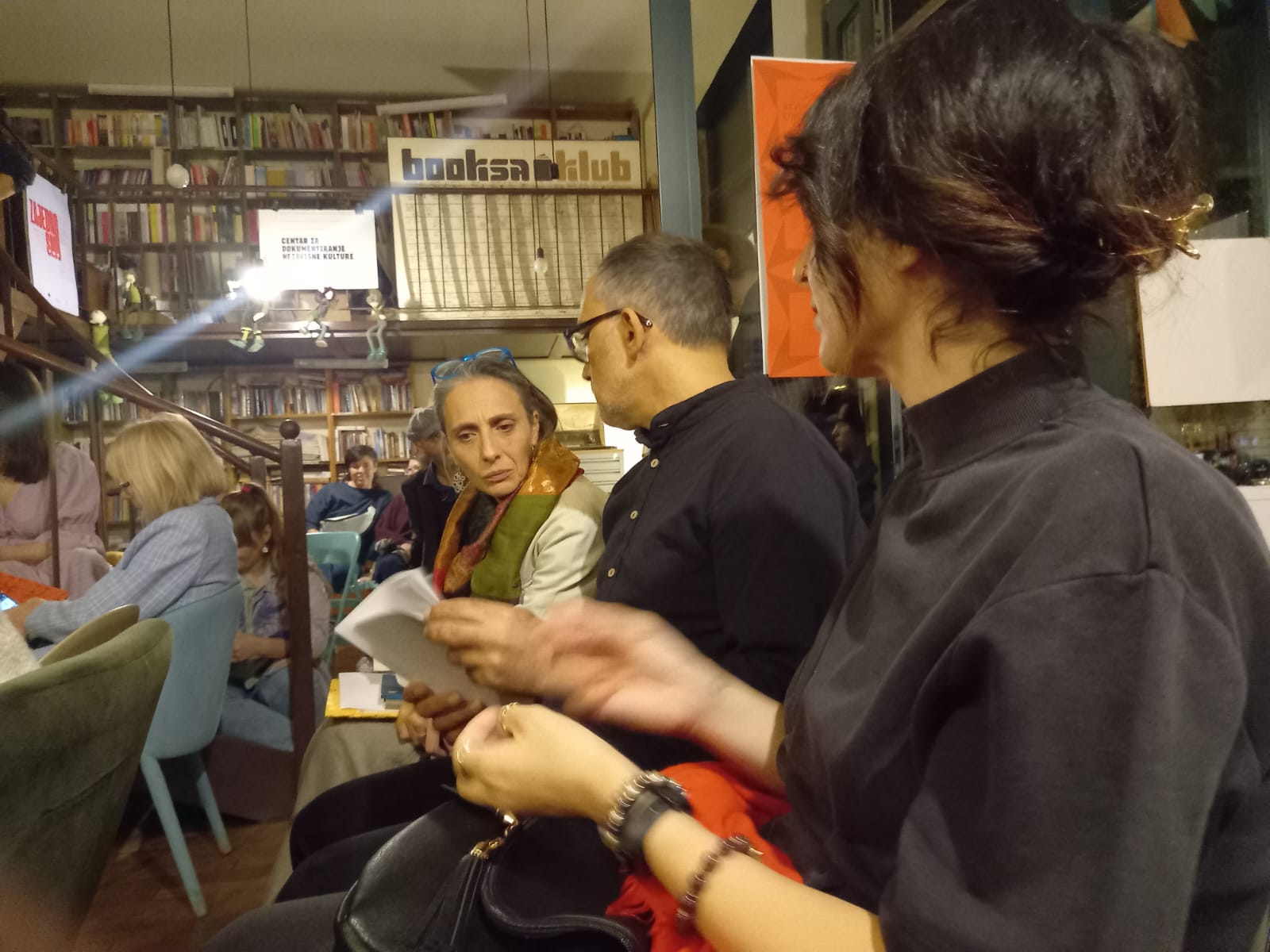
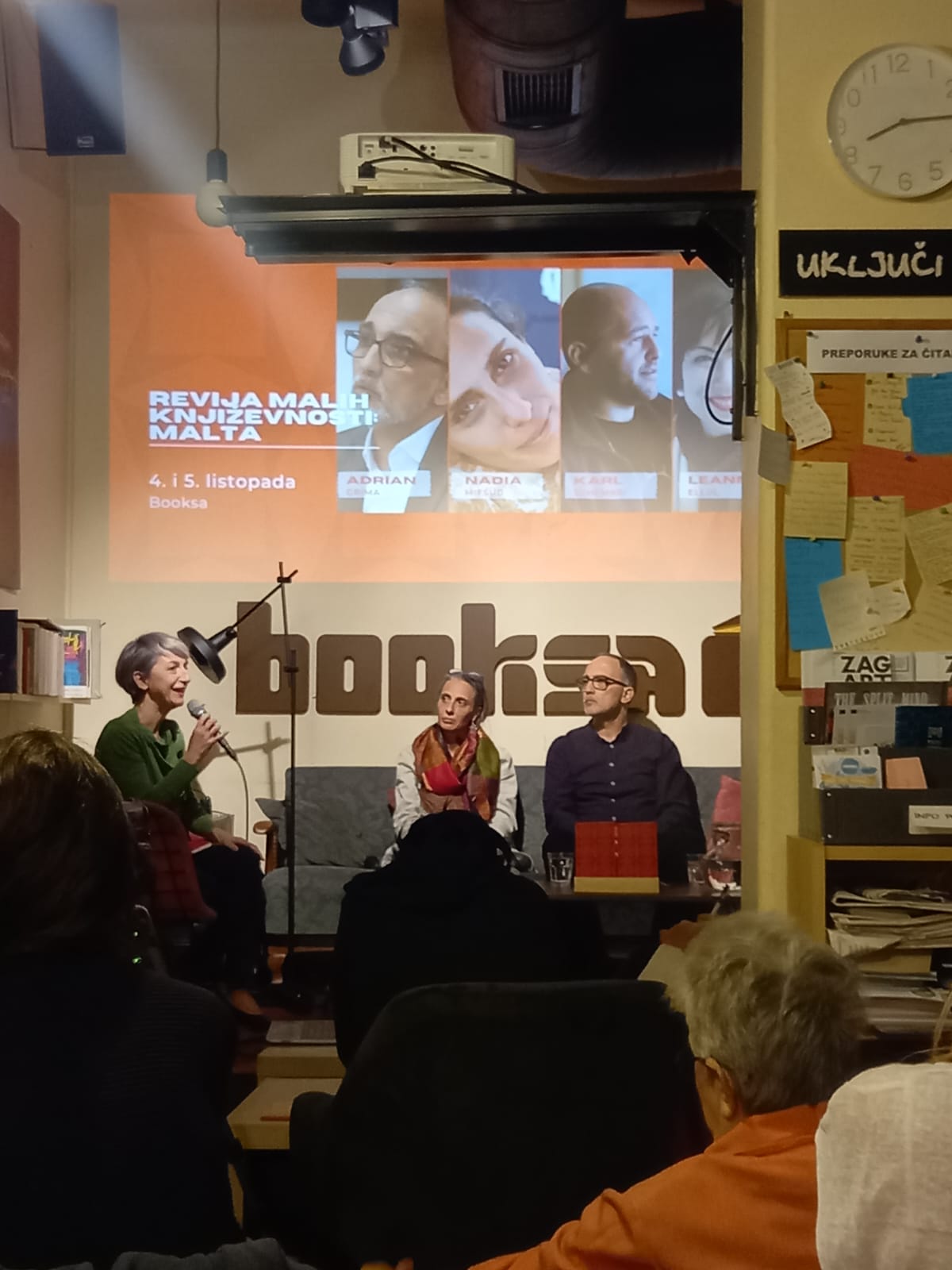
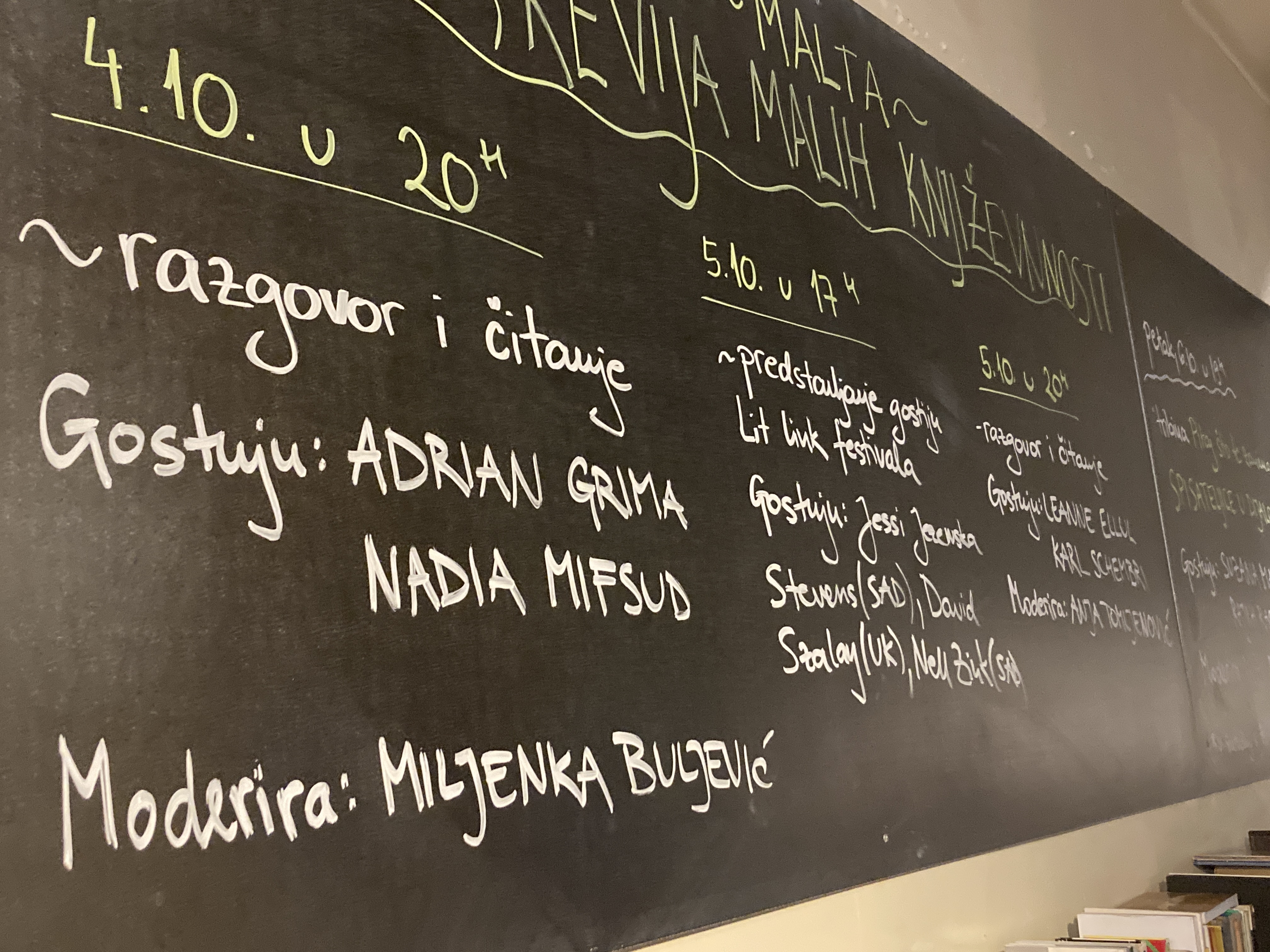
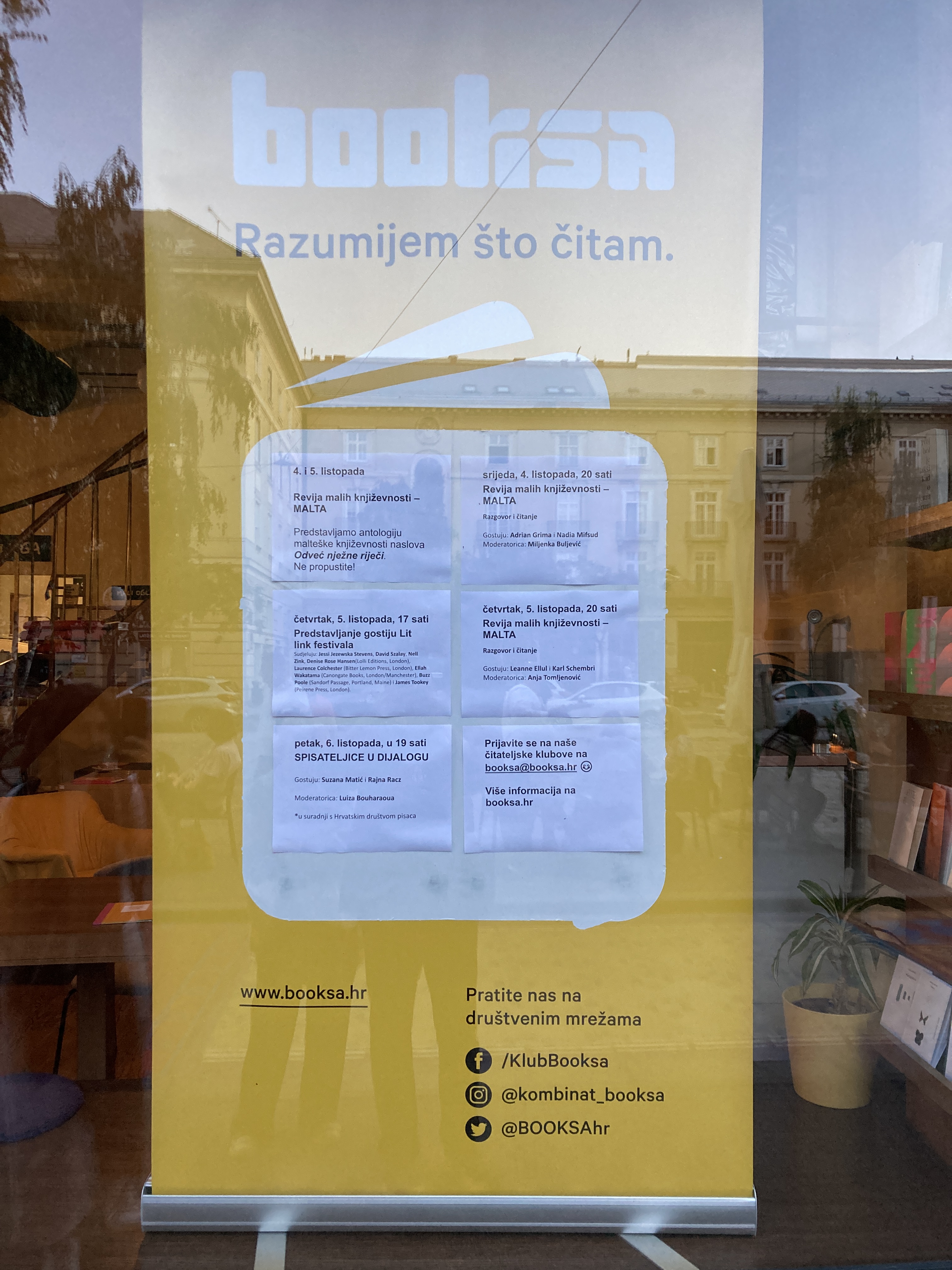
Gioele and Murad could not travel to Zagreb, so the two public events of the festival, held at the charming centre of Booksa in the old city centre, featured a discussion and reading with Nadia and myself on Wednesday 5 October at 8.00pm, in which I spoke about my selection and the literary scene in Malta, and read poems by Gioele and Murad; and another discussion and reading by Leanne and Karl on Thursday 6 October at 8.00pm. We spoke in English and read our work mainly in Maltese, with the Croatian translations screened on the wall behind us.
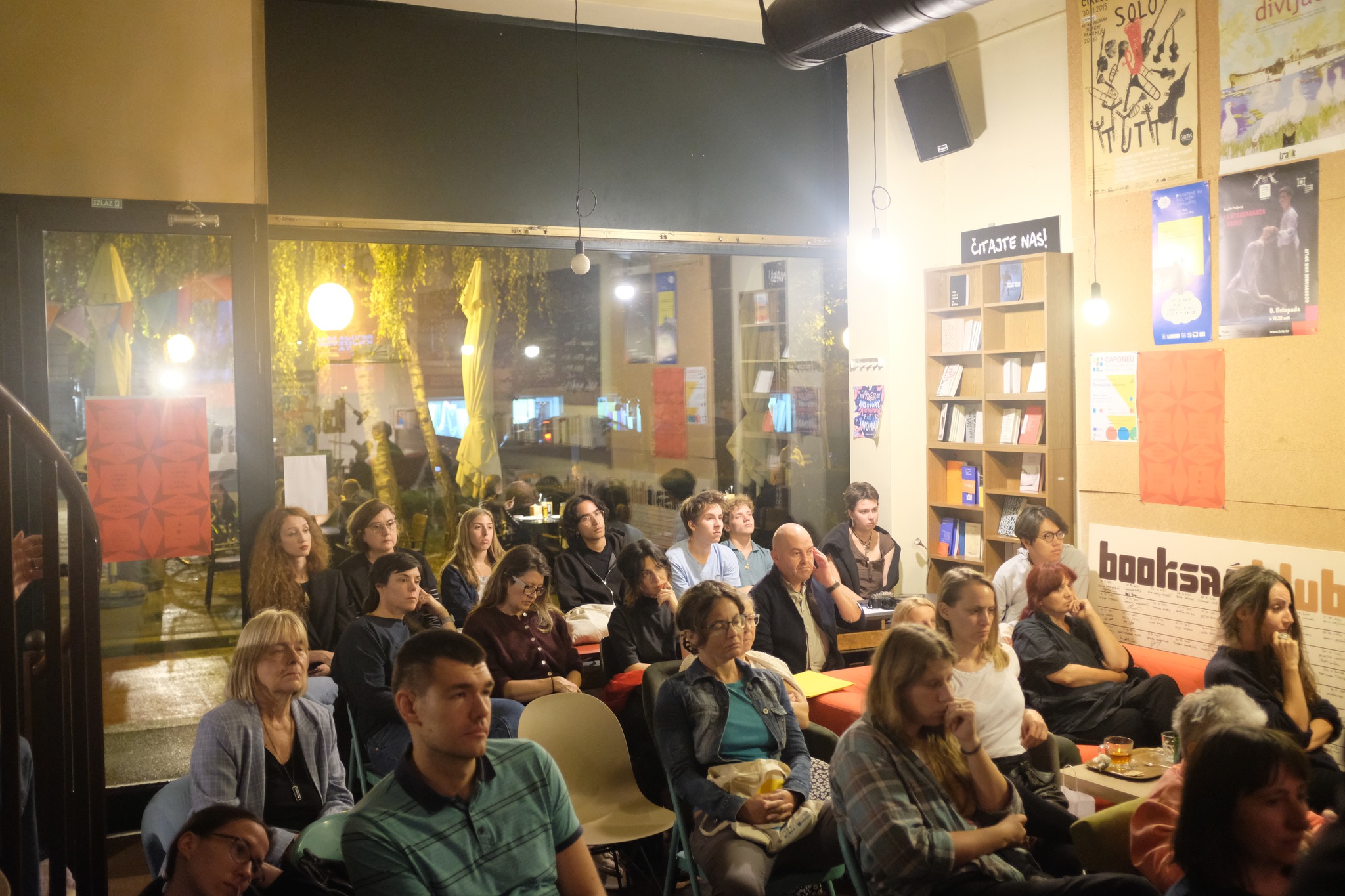
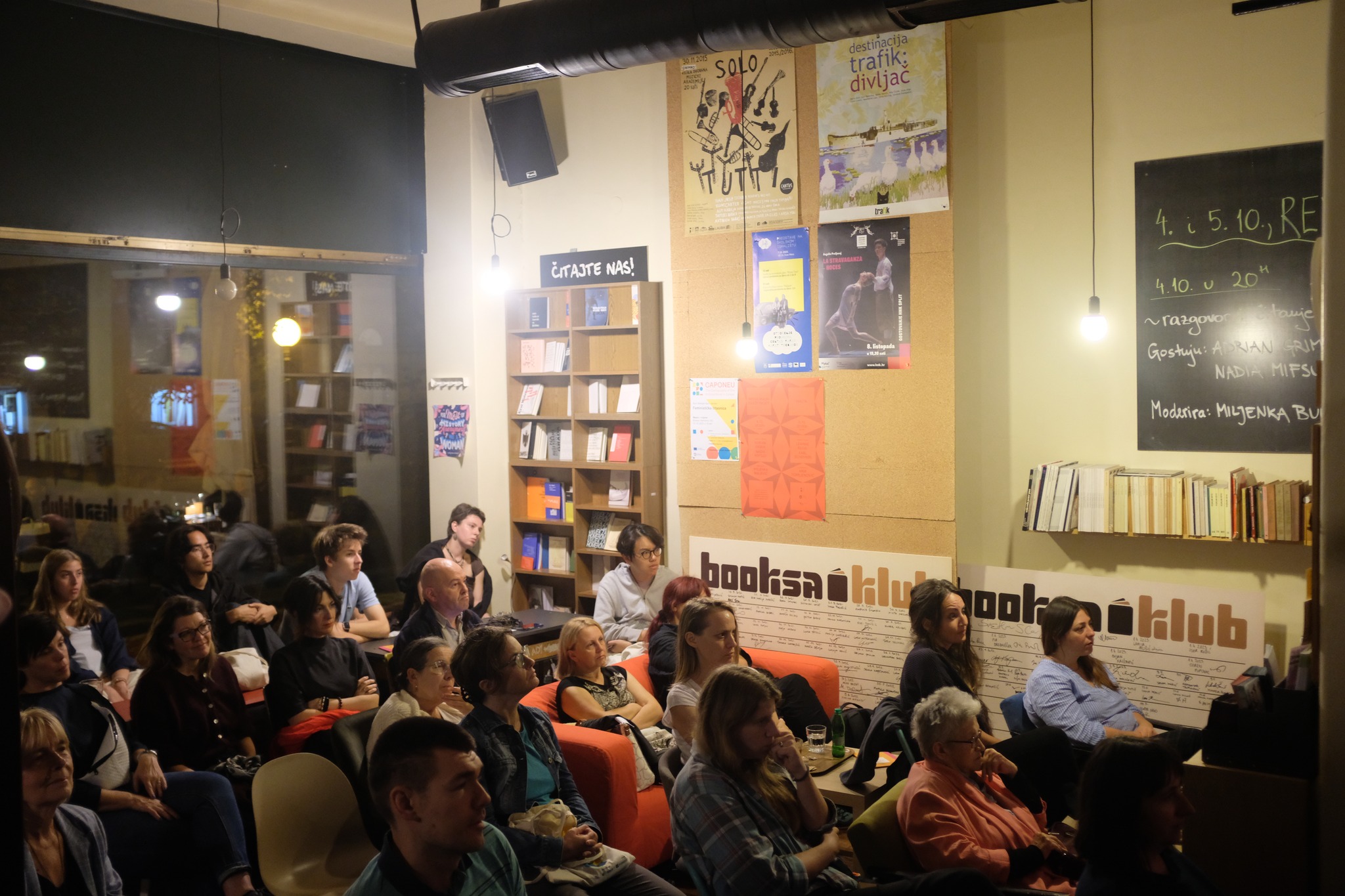
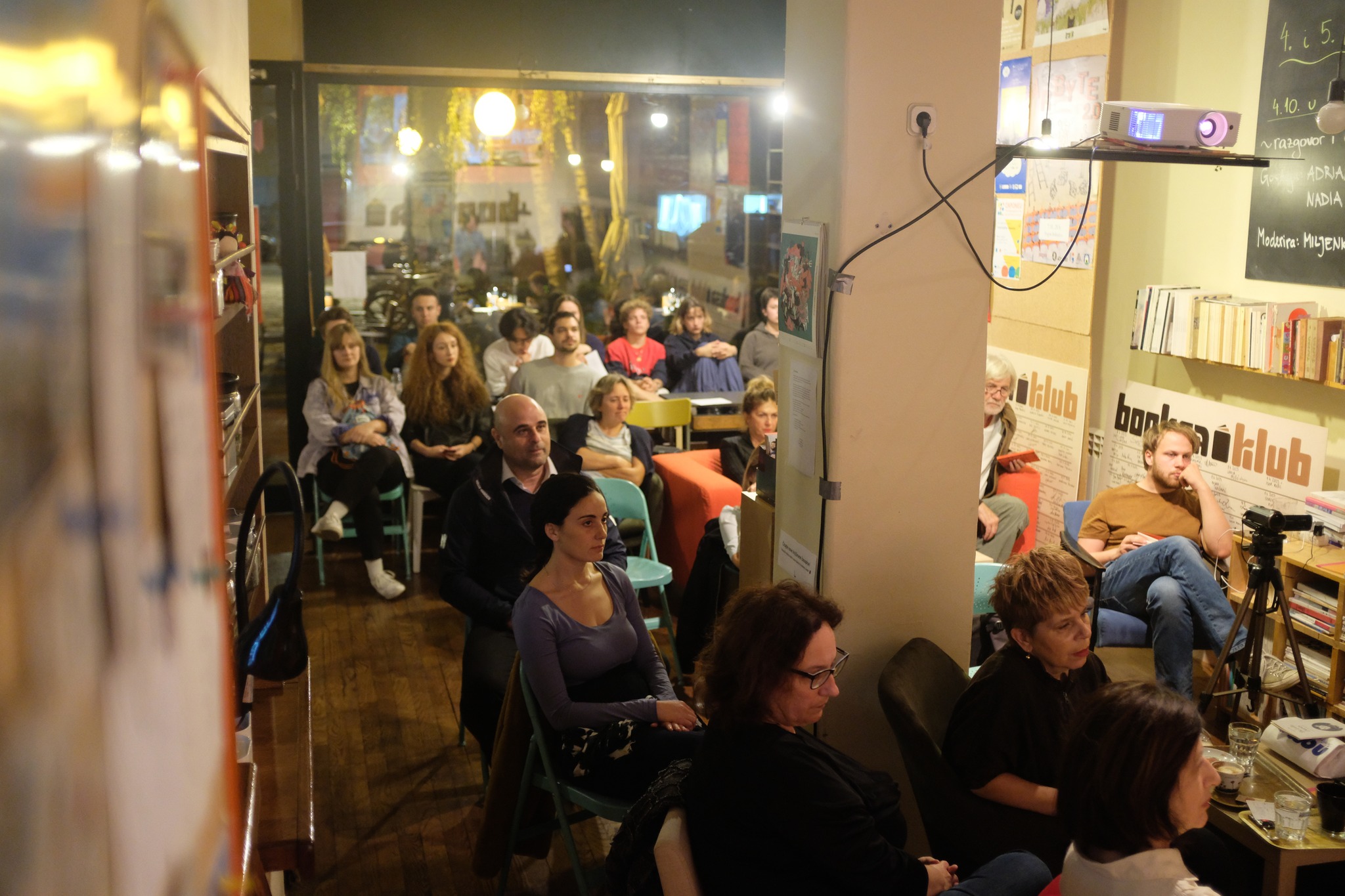
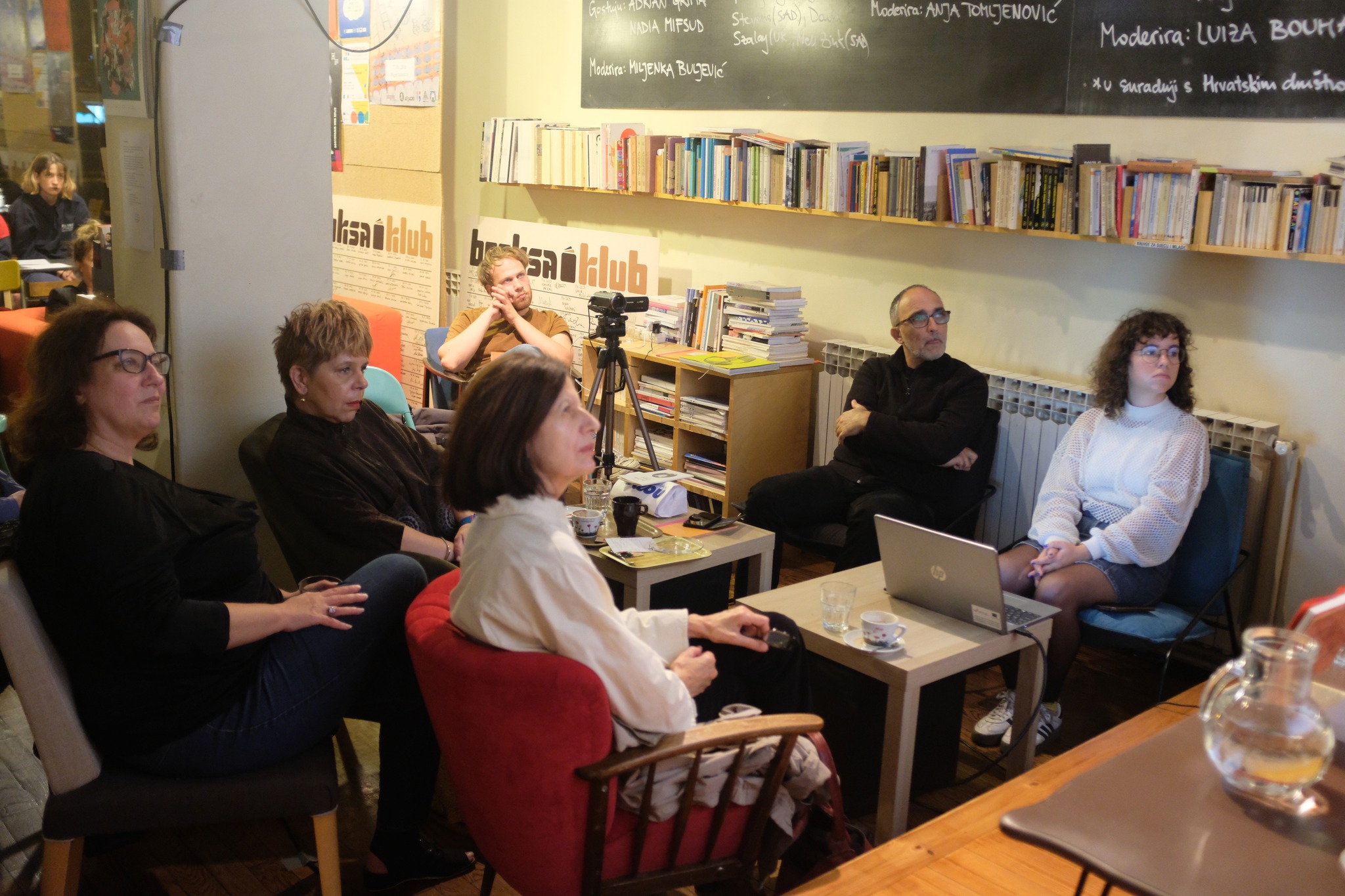
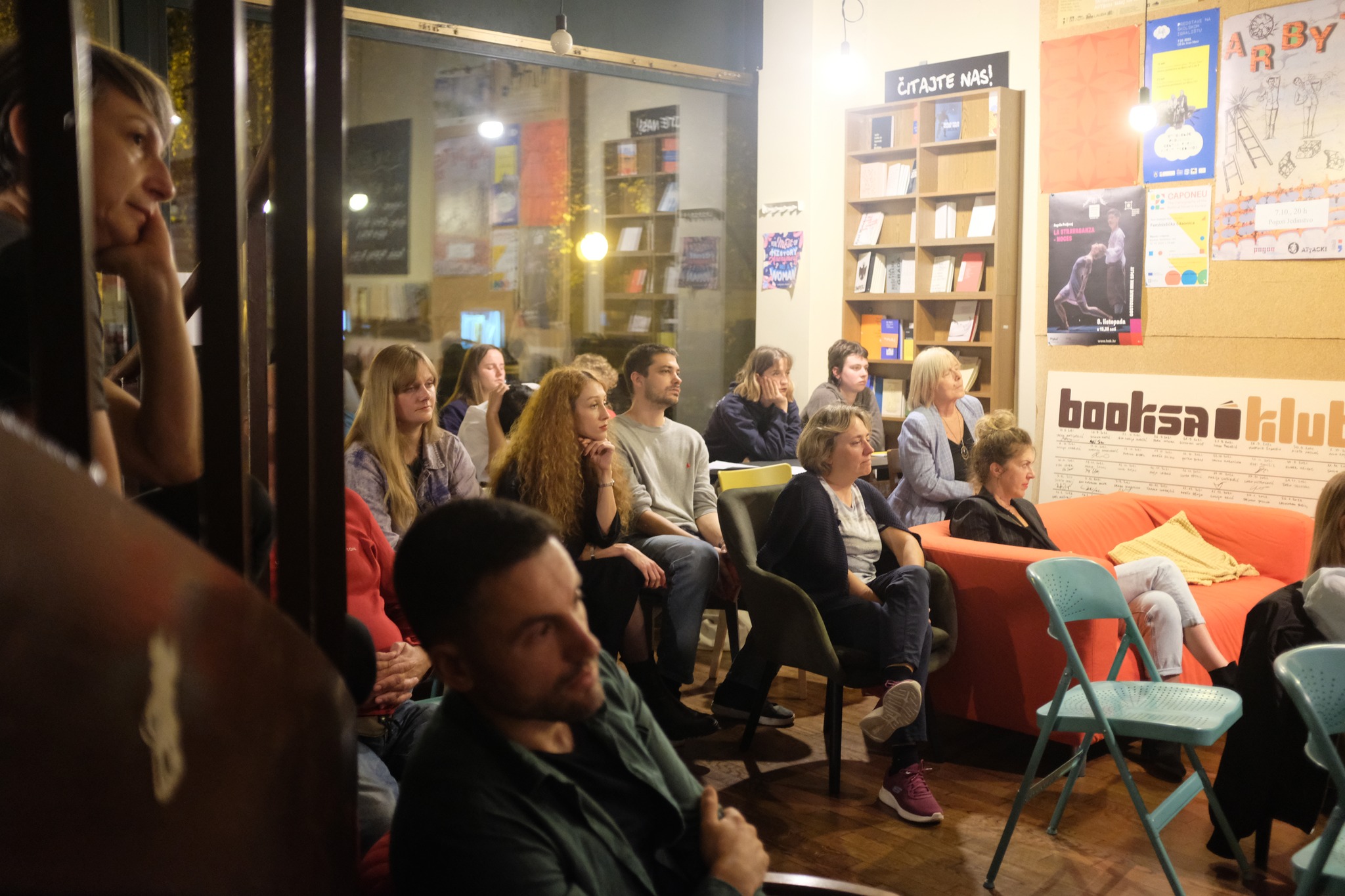
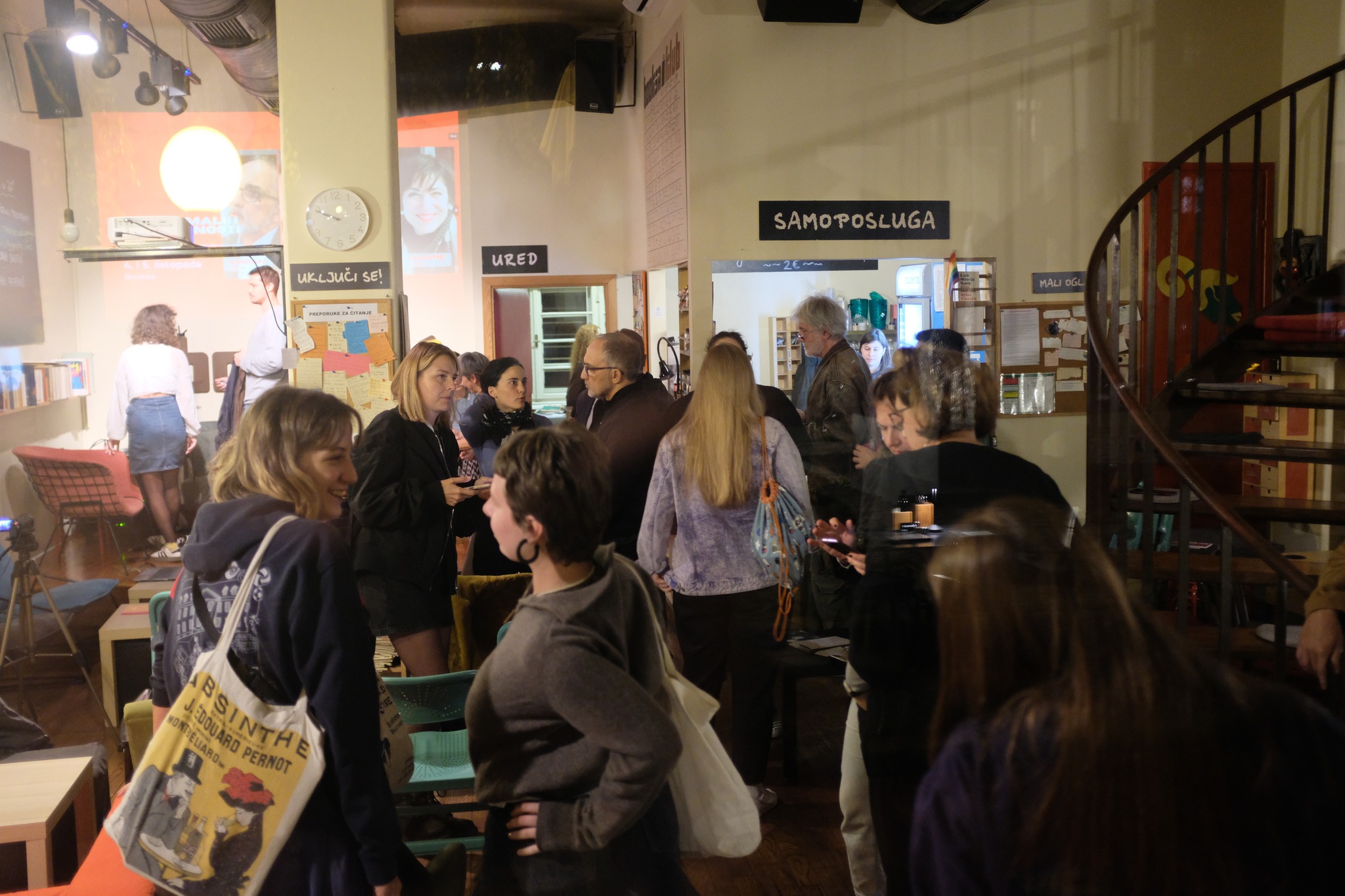
The audiences of mainly young people that filled Booksa’s lounge were thoroughly engaged and there were interesting discussions with the audience after both events. The first event was moderated by Miljenka Buljević (or Mika) and the second event was moderated by Anja Tomljenović.
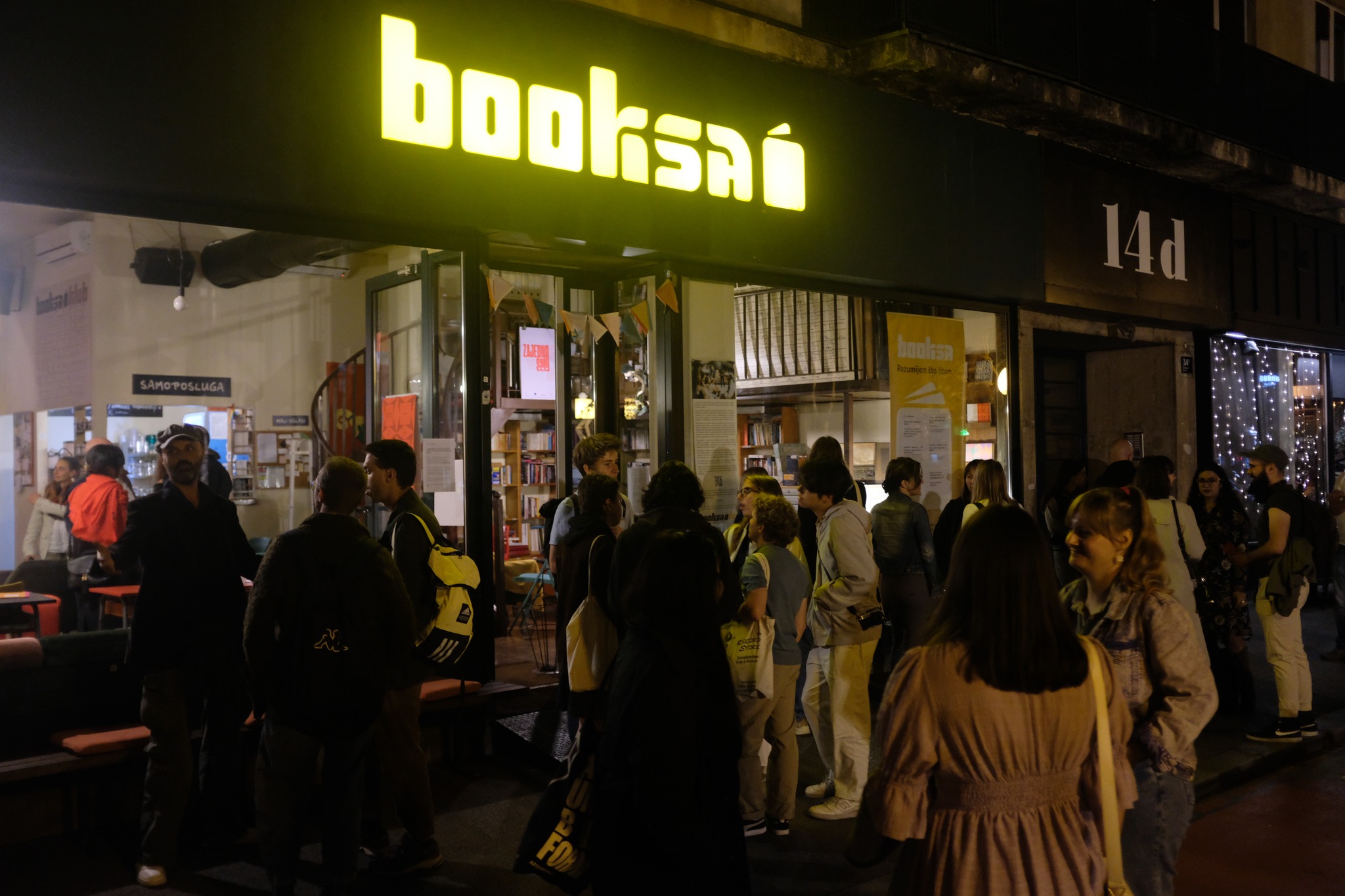
The official pictures of the evenings were taken for Booksa by Kyril Rubinstein and the Croatian cultural television station VIDA were present on Thursday 5 October to interview Miljenka Buljević of Booksa, Adrian Grima and Nadia Mifsud.
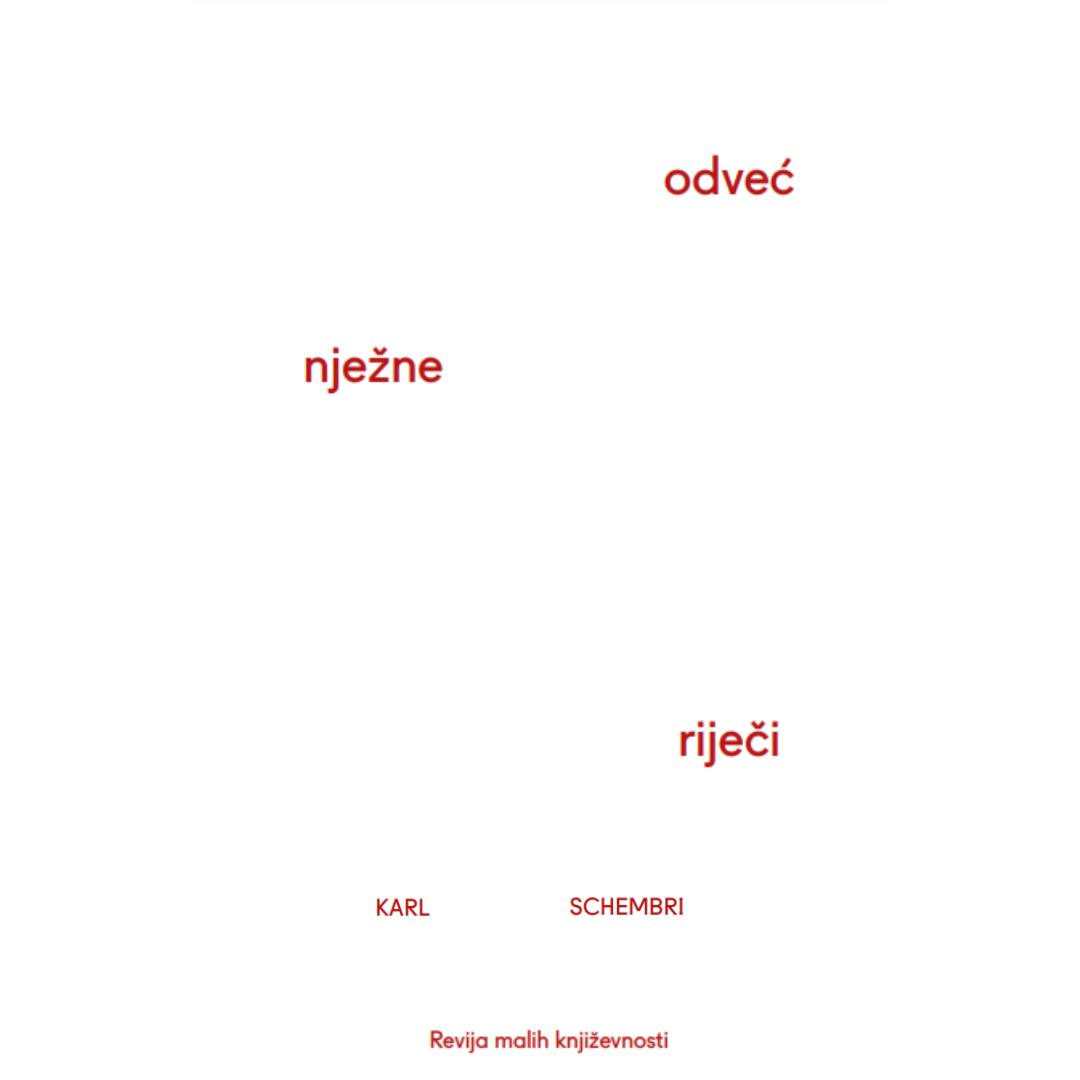
U 20h pridružite nam se na razgovoru s ovogodišnjim selektorom Adrianom Grimom i pjesnikinjom Nadijom Mifsud, koja će i pročitati svoje pjesme na malteškom uvrštene u antologiju “Odveć nježne riječi”. Razgovor će moderirati Miljenka Buljević.


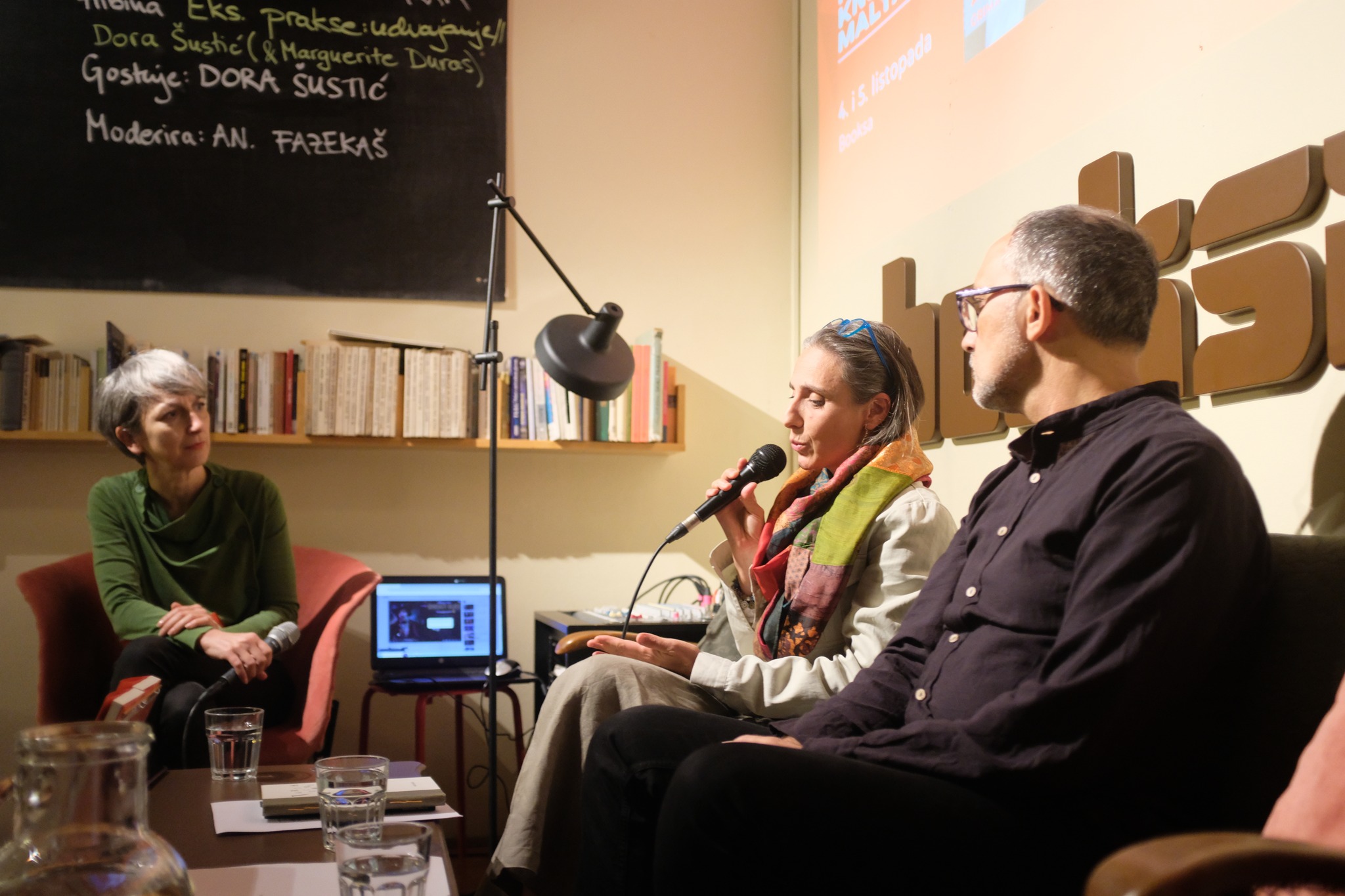
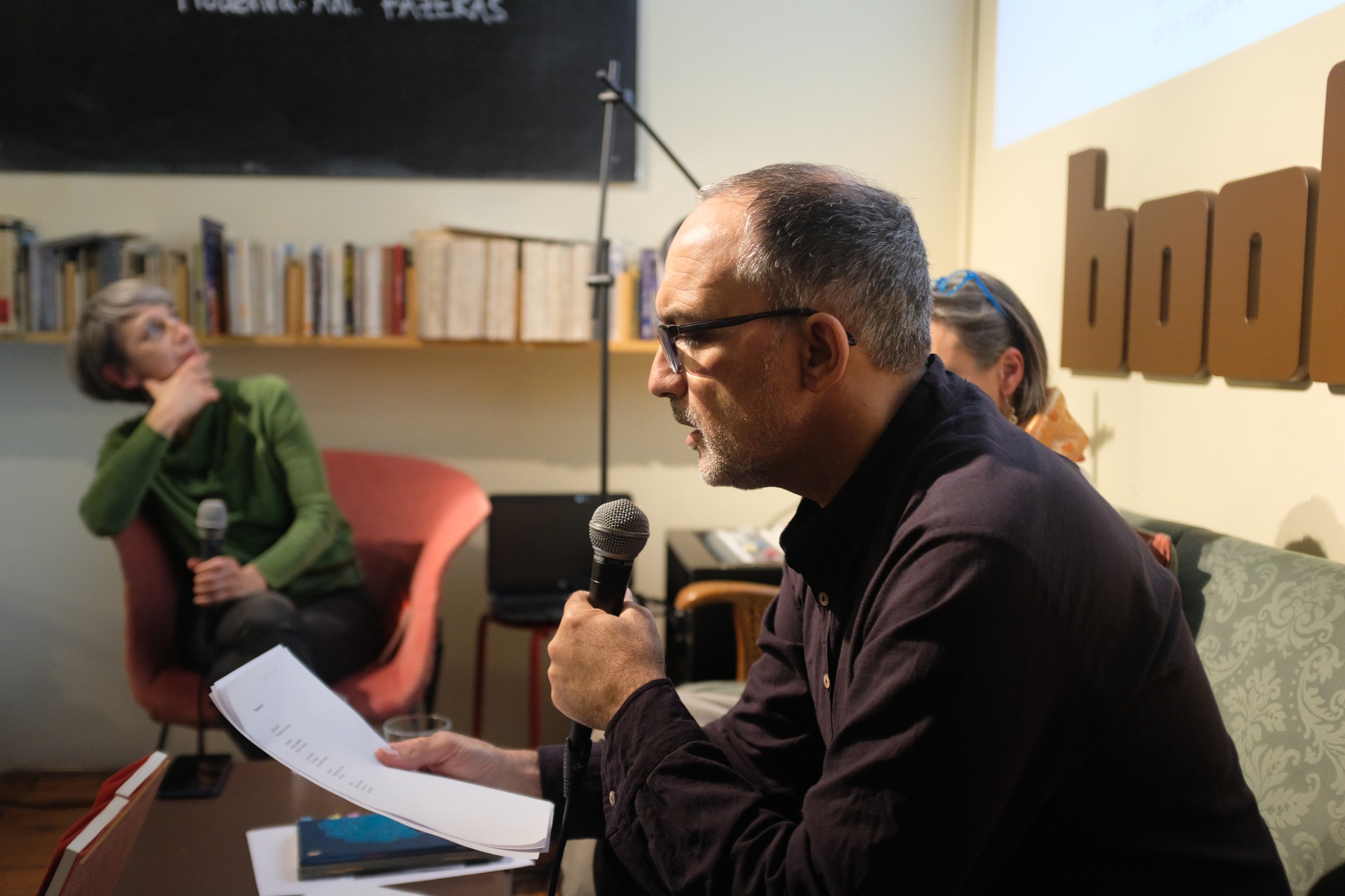

U uvodnom tekstu antologije Grima piše: “Bit poezije, i književnosti općenito, jest odbijanje ograničenja. Novo ‘otkrivanje’ ovih pjesama na hrvatskom i za hrvatsku književnu tradiciju nesumnjivo će im udahnuti novi život i željno iščekujem saznati kako će ‘zvučati’. Kako će nastaniti svoj novi prostor i vrijeme.” A mi jedva čekamo da antologiju “Odveć nježne riječi” krenete čitati i udahnete ovoj sjajnoj poeziji novi život.
Booksa
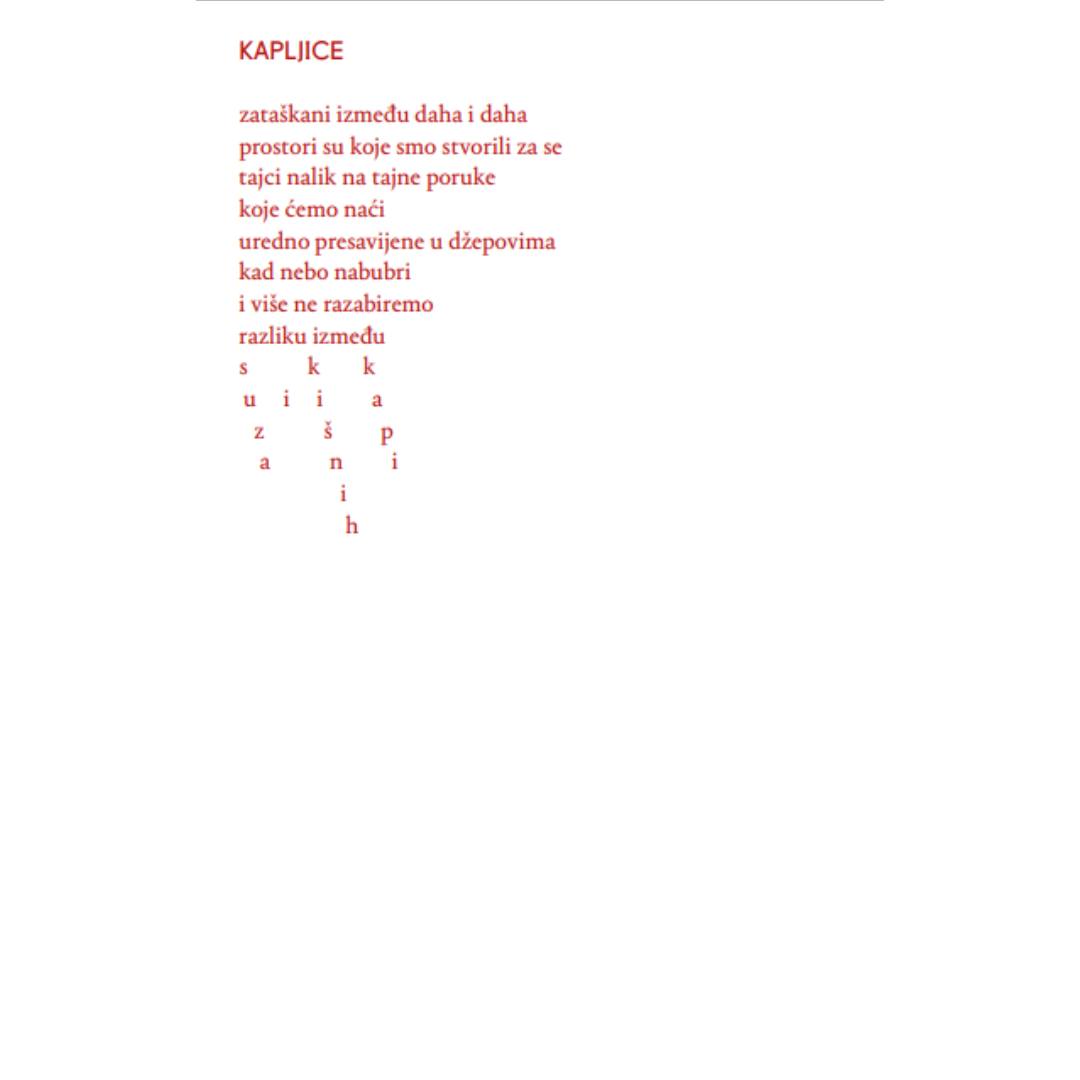
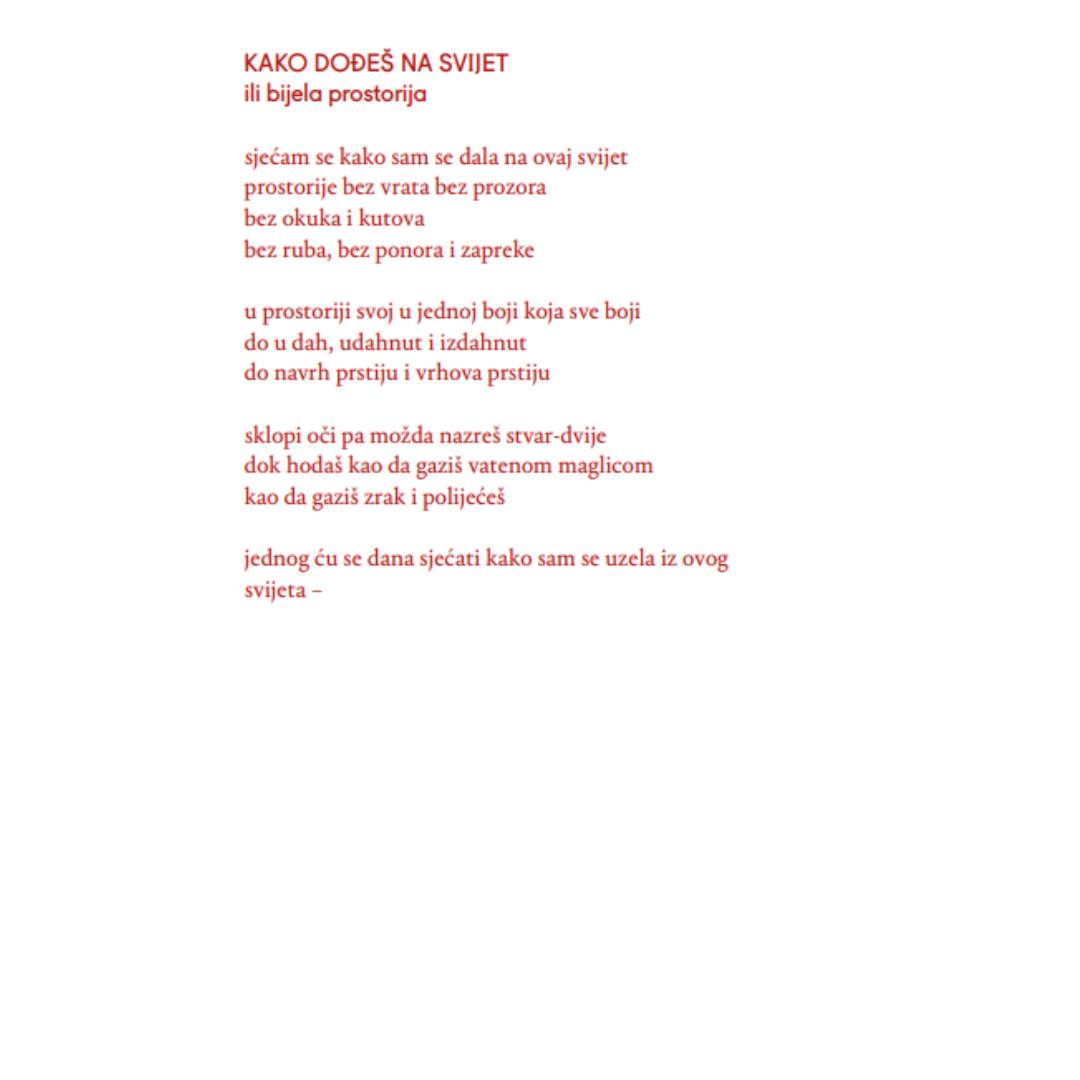
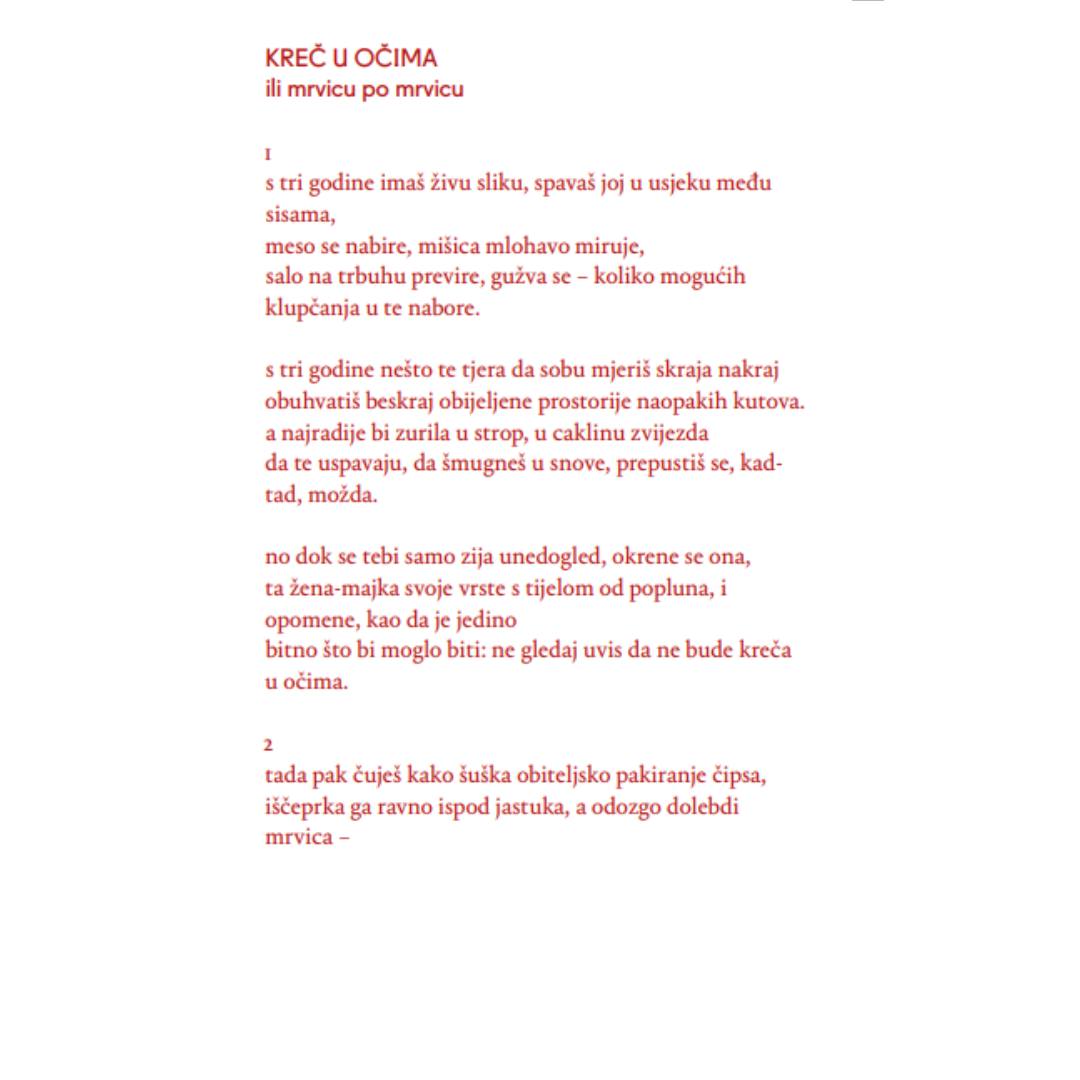
U 20h pridružite nam se na razgovoru s pjesnikinjom i pjesnikom Leanne Ellul i Karlom Schembrijem. Razgovor će moderirati Anja Tomljenović, a Leanne i Karl čitat će svoju poeziju na malteškom.



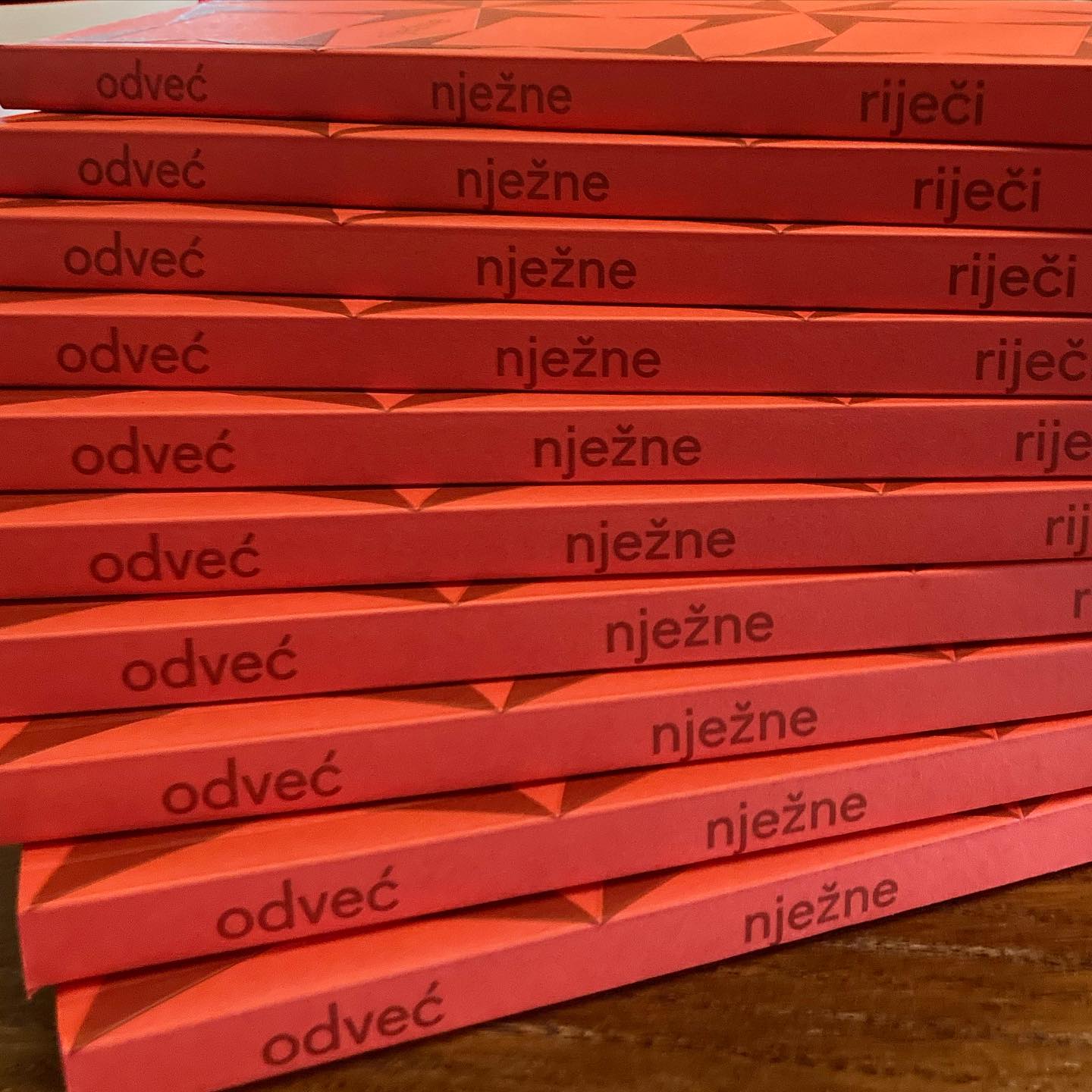
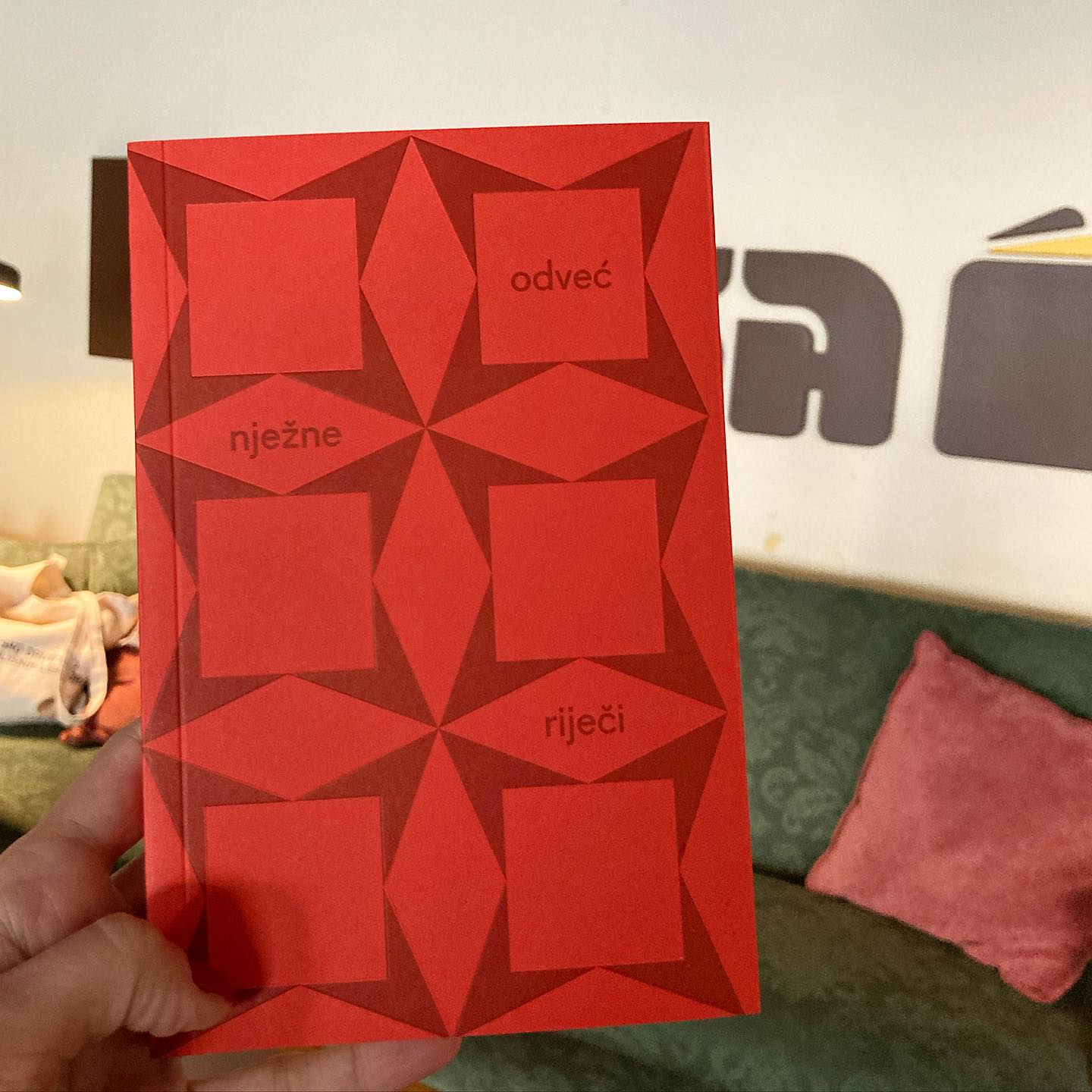
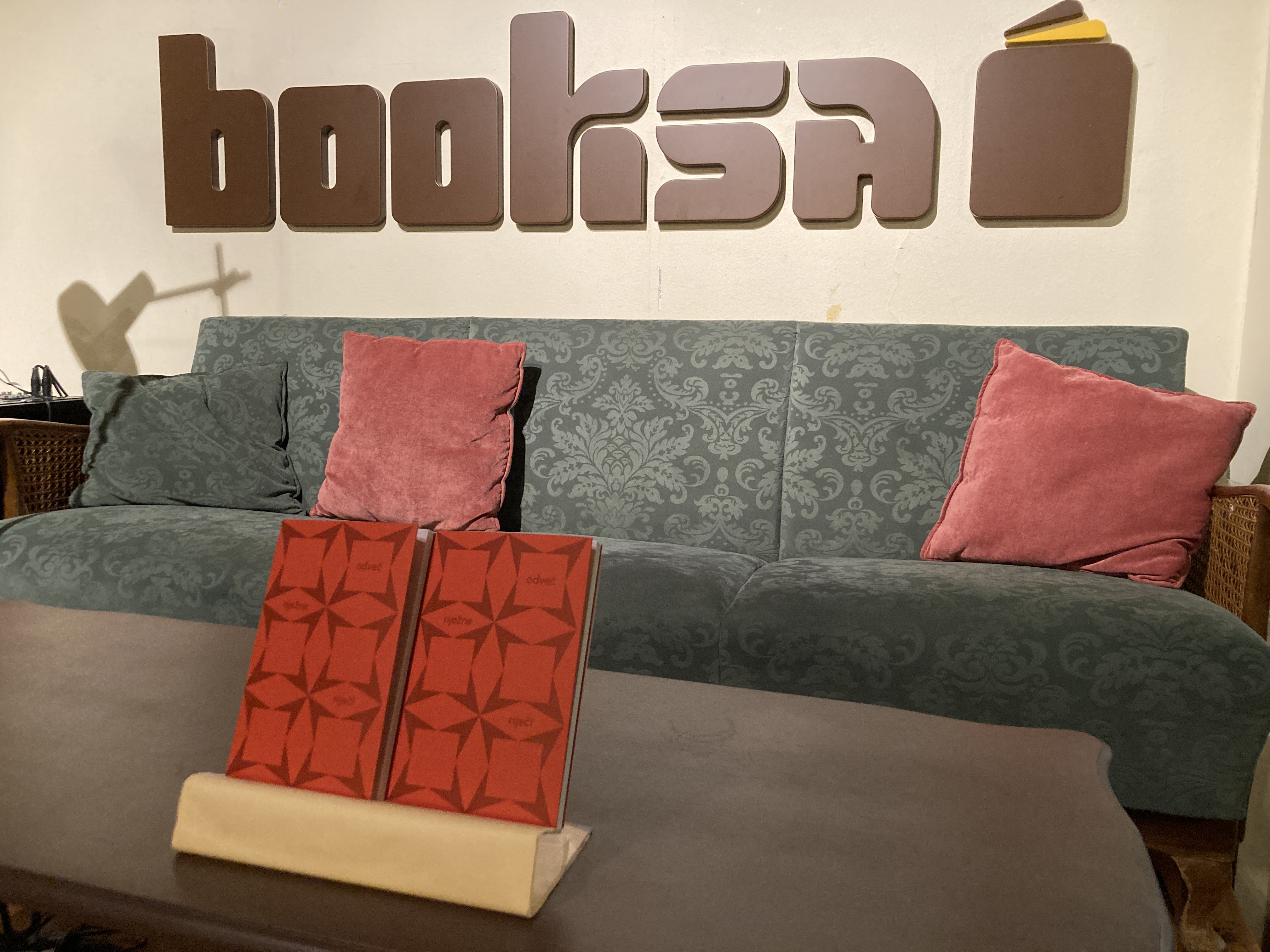
The Anthology of Maltese literature in Croatian
Because this year’s focus was on Malta, Booksa published an anthology with a selection of the poets’ works translated into Croatian and they asked me to write an introduction to “introduce the Maltese literary context” and explain my selection. My introduction, “These atrophied words. A partial introduction to contemporary Maltese literature,” was translated into Croatian, “Ove zakržljale riječi. Djelomičan uvod u suvremenu književnost Malte,” and appears here. The title refers to a poem by Leanne Ellul as translated into English by Albert Gatt:
In Leanne Ellul’s “the atrophy of wounds, or until I feel the pain inside,” the persona encourages the anonymous addressee, possibly both the reader and herself, to “keep mouthing these atrophied words and you might give them form.” To atrophy, the verb, is to waste away, especially as a result of the degeneration of cells. The original Maltese version of this line uses the unusual adjective “atrofikat” to describe “il-kliem,” the collective noun for “words” so typical of the Arabic morphological structure of Maltese. Her line brings to mind the struggle of Maltese poetry, and poetry in general, to mouth experience, the need to commission new words, to reshape the language. It’s a constant process of construction, of rebirth.
adrian grima
The editors of the anthology carried out a written interview with each of the poets who were asked to talk about specific aspects of their poetry and about the poems that appear in the anthology.


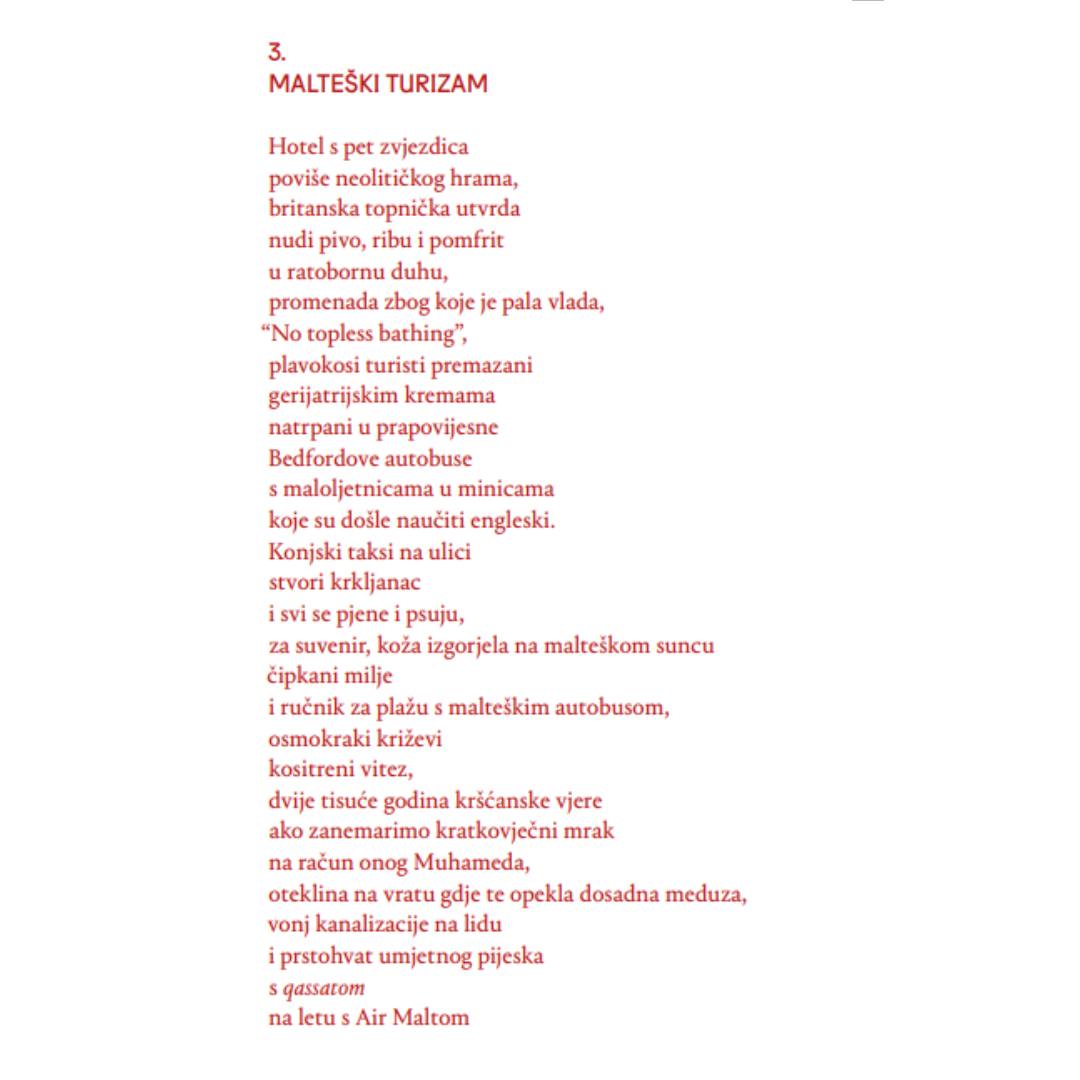
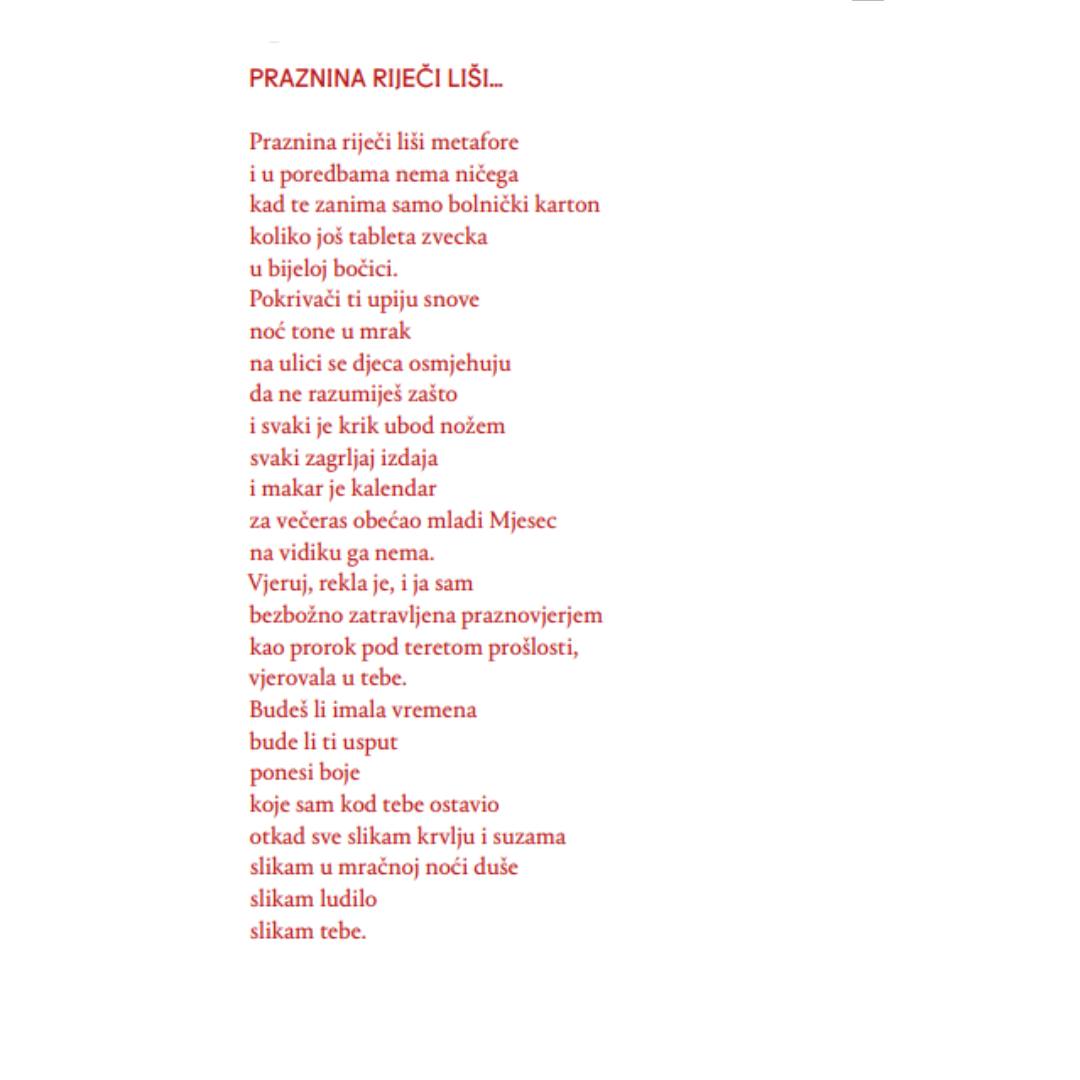
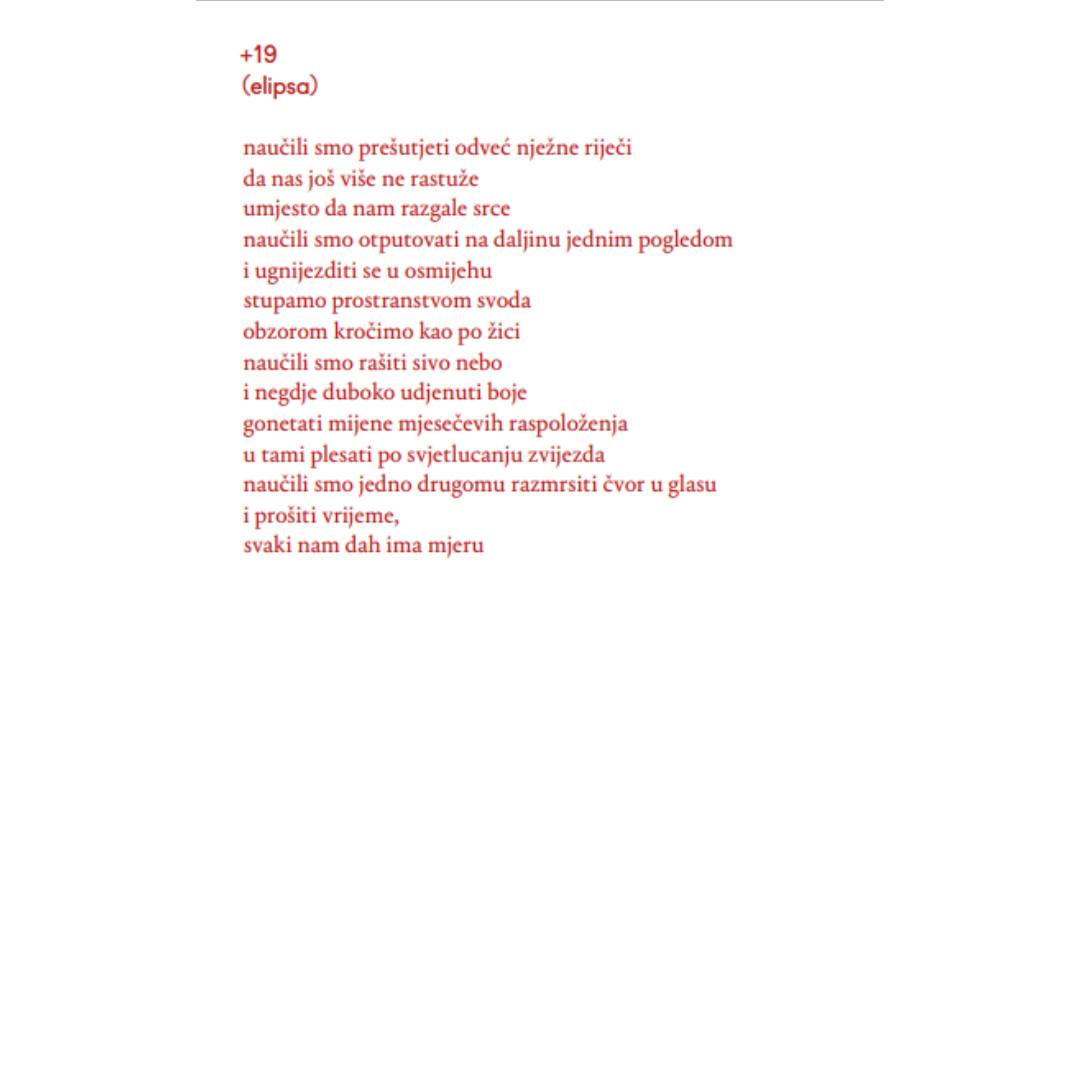

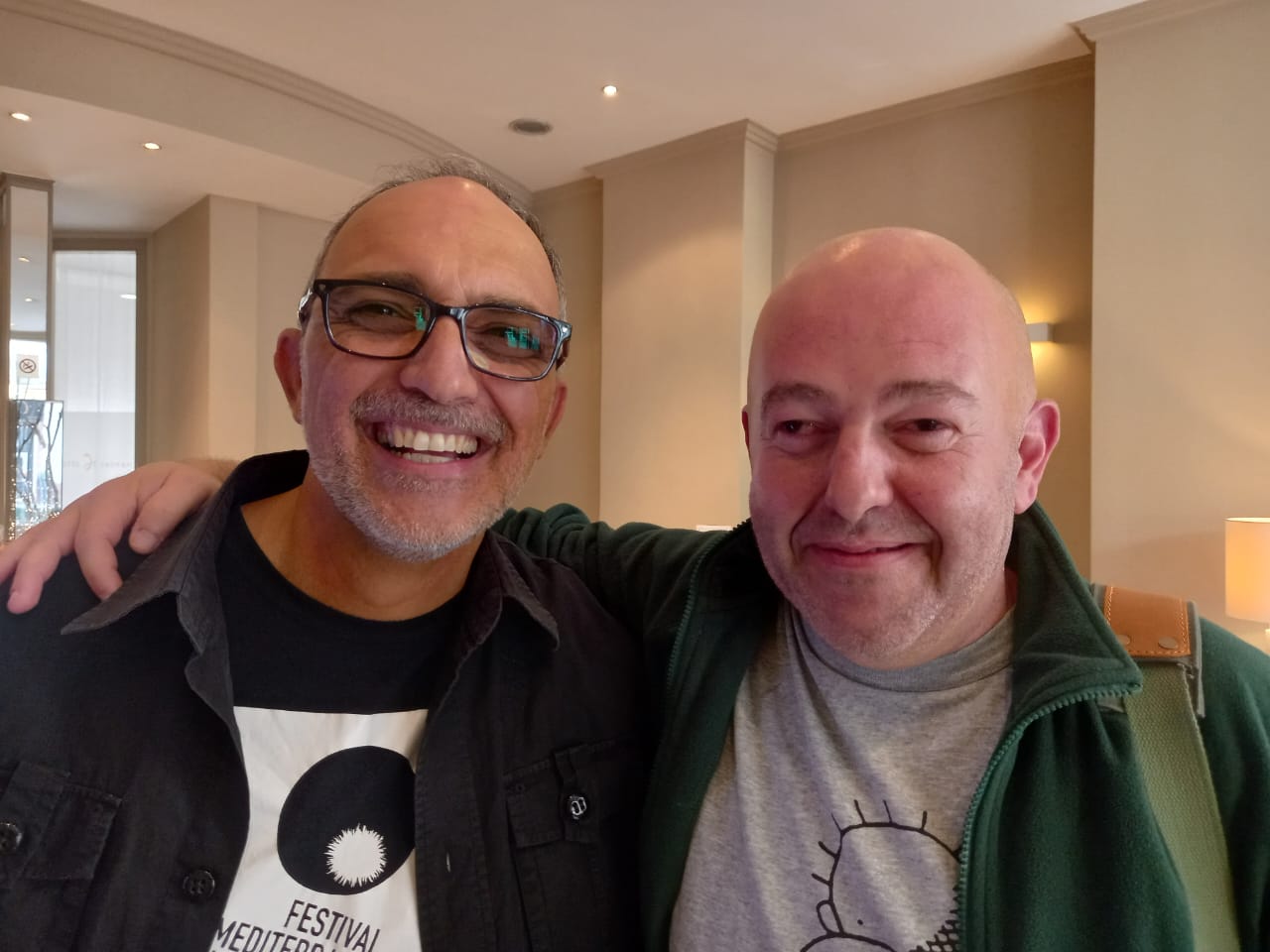
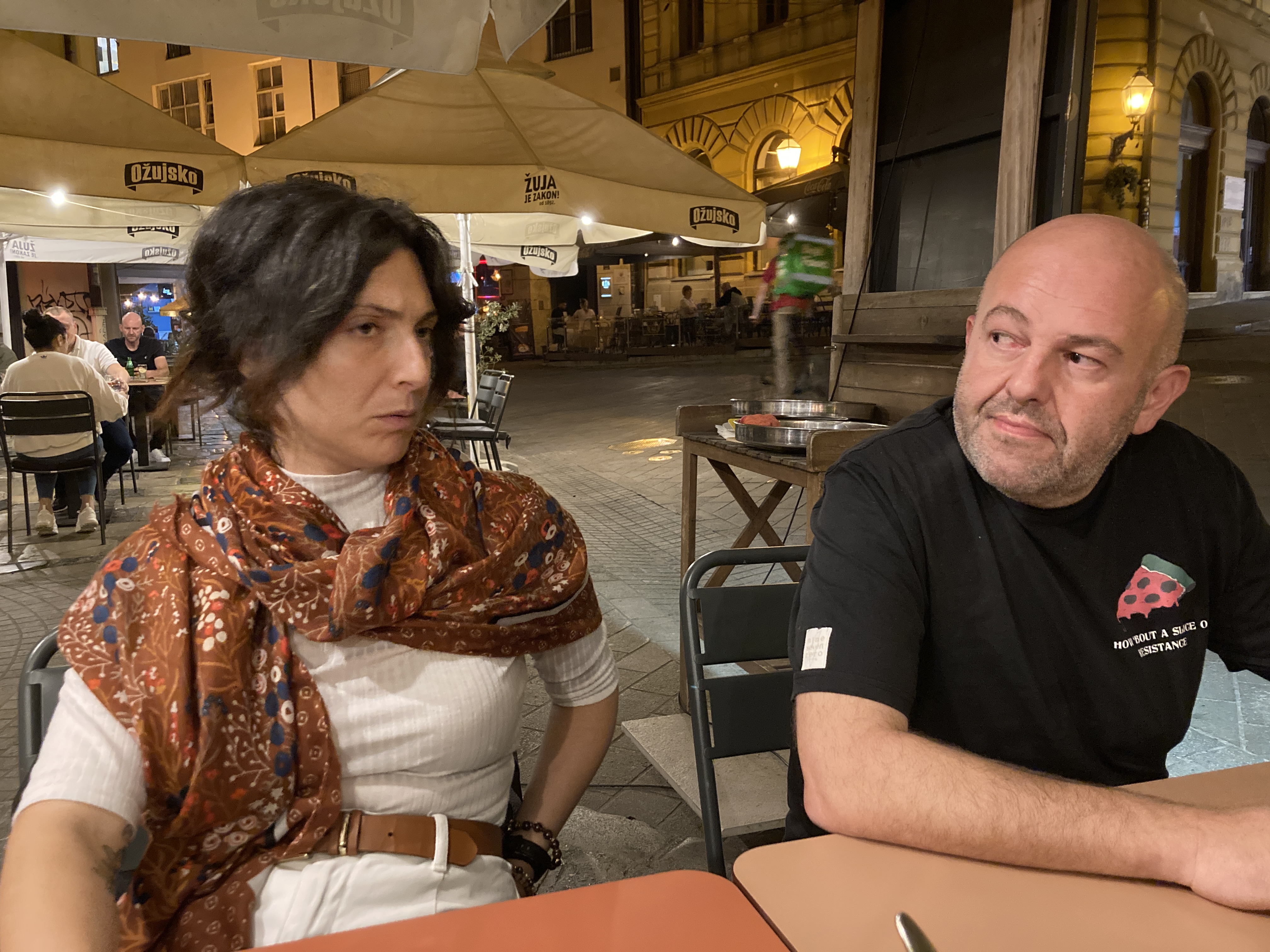
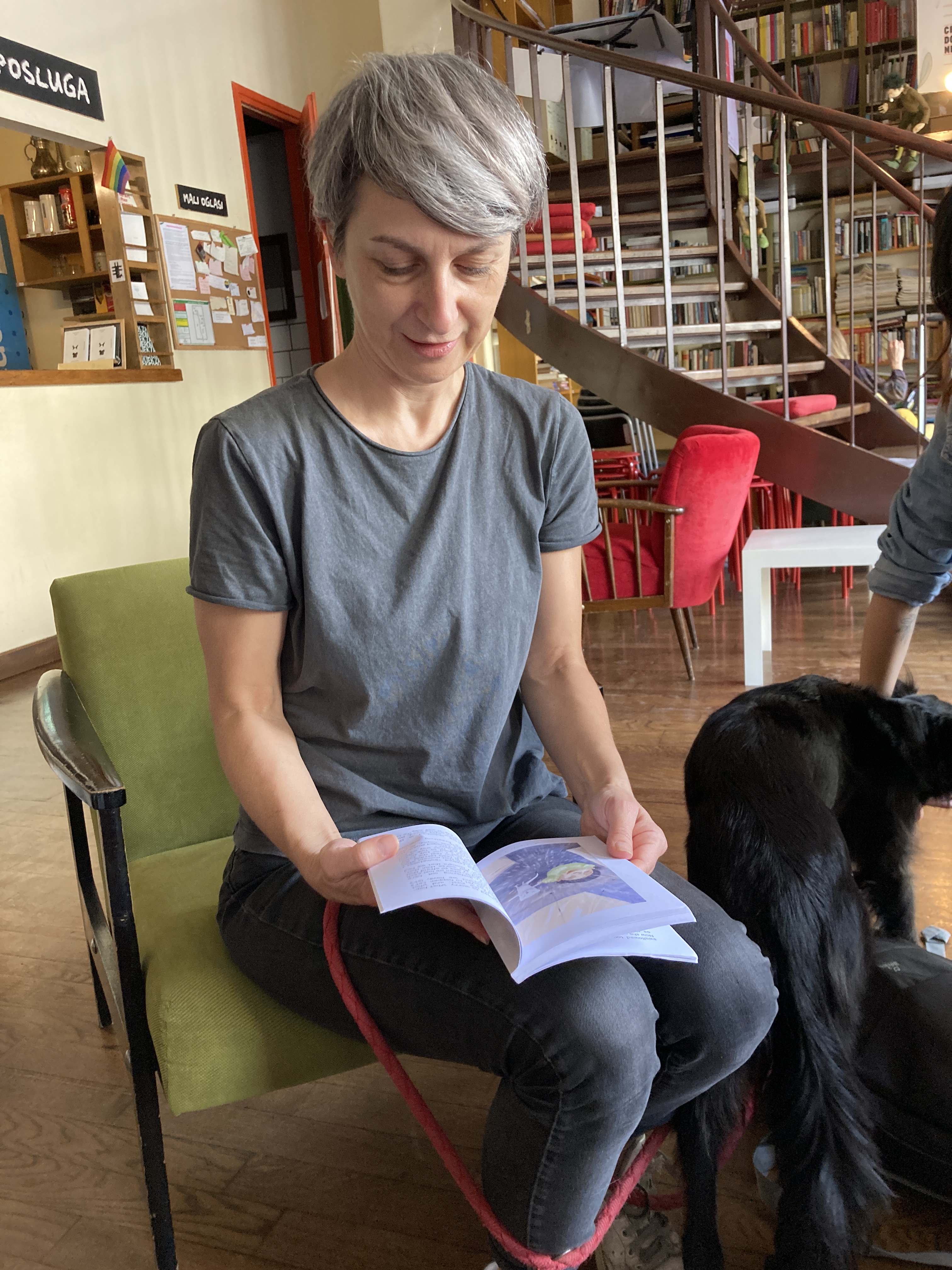
Leanne Ellul, Karl Schembri and Anja Tomljenović | Pictures by Adrian Grima
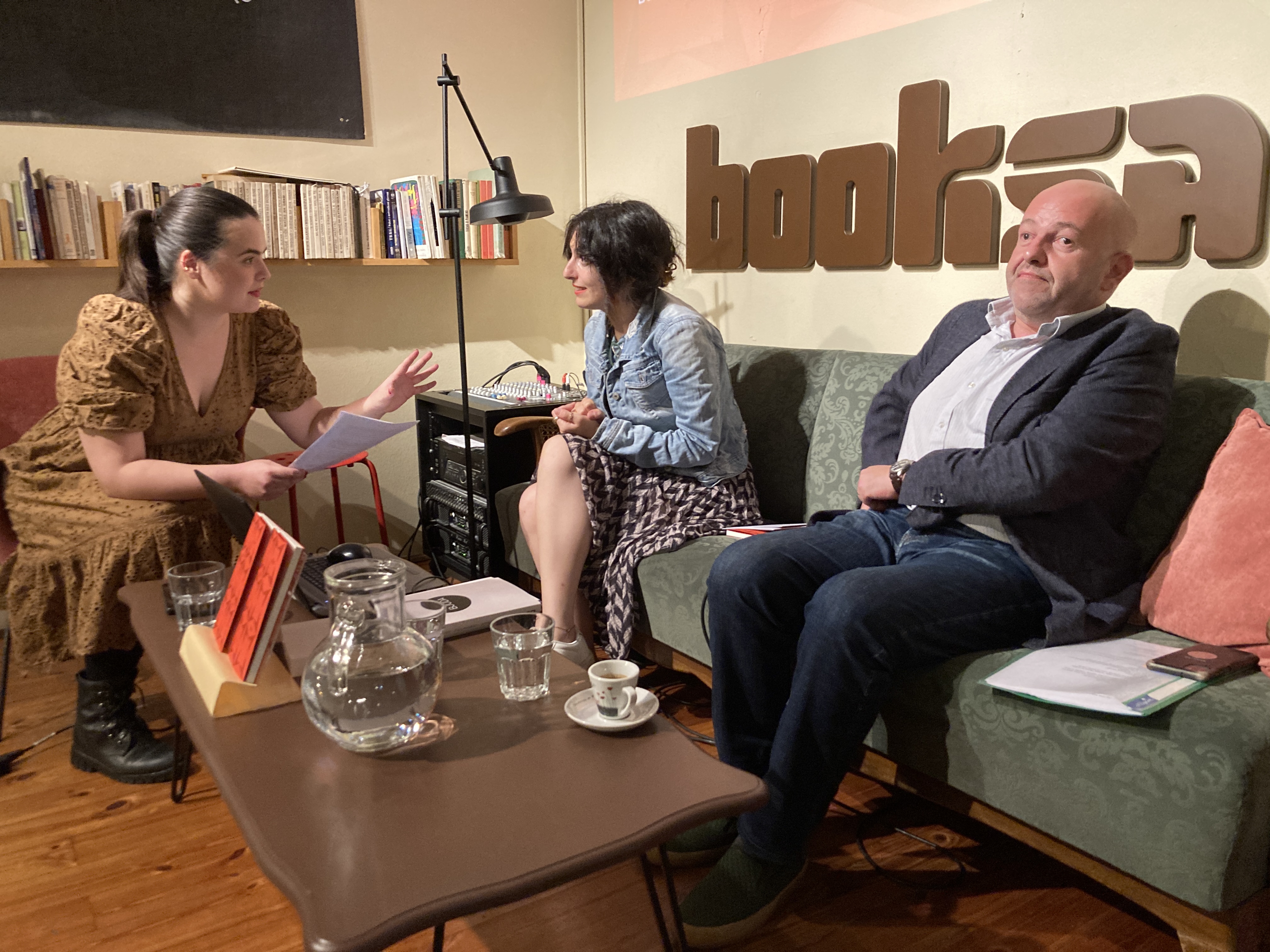


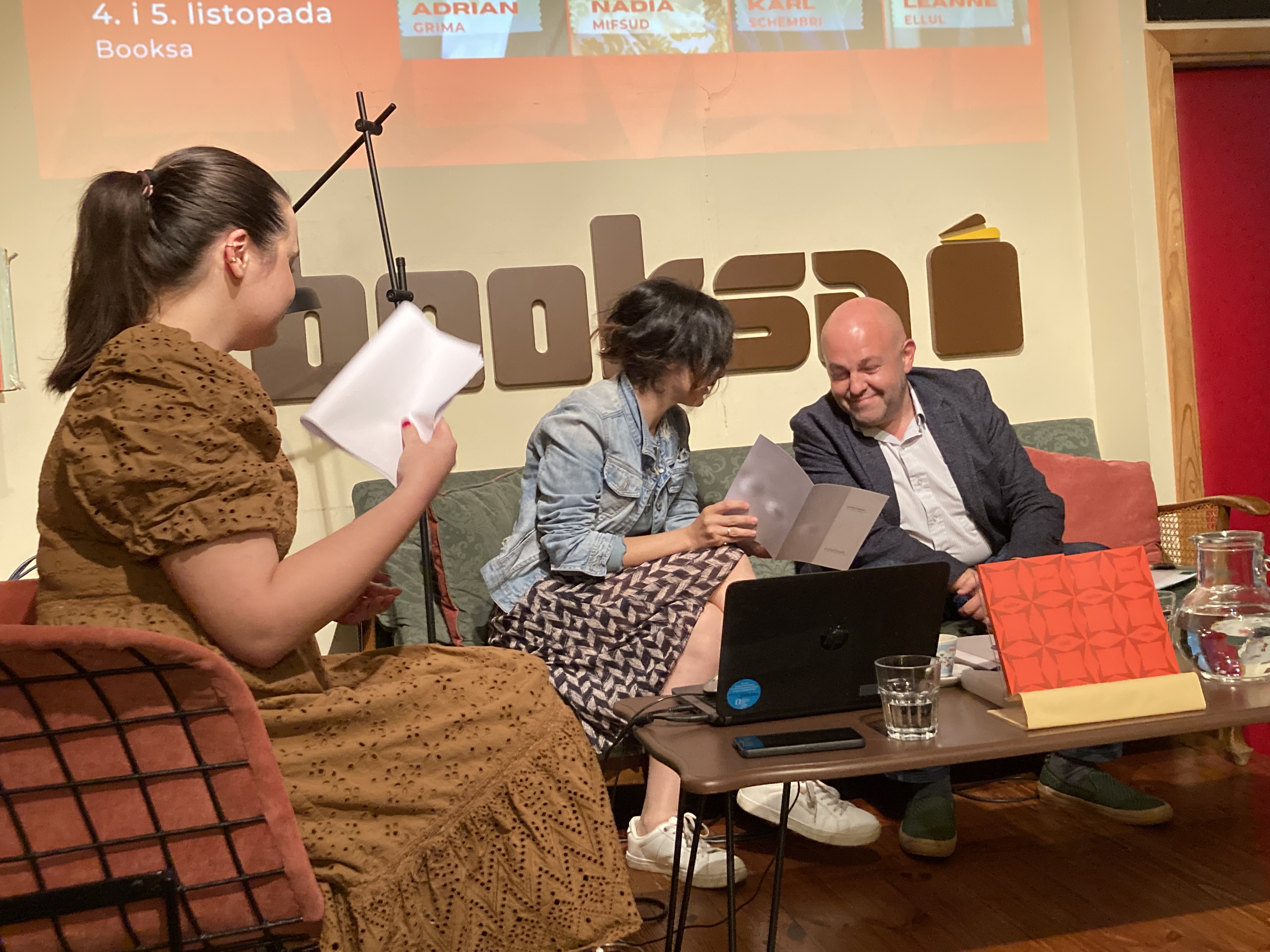
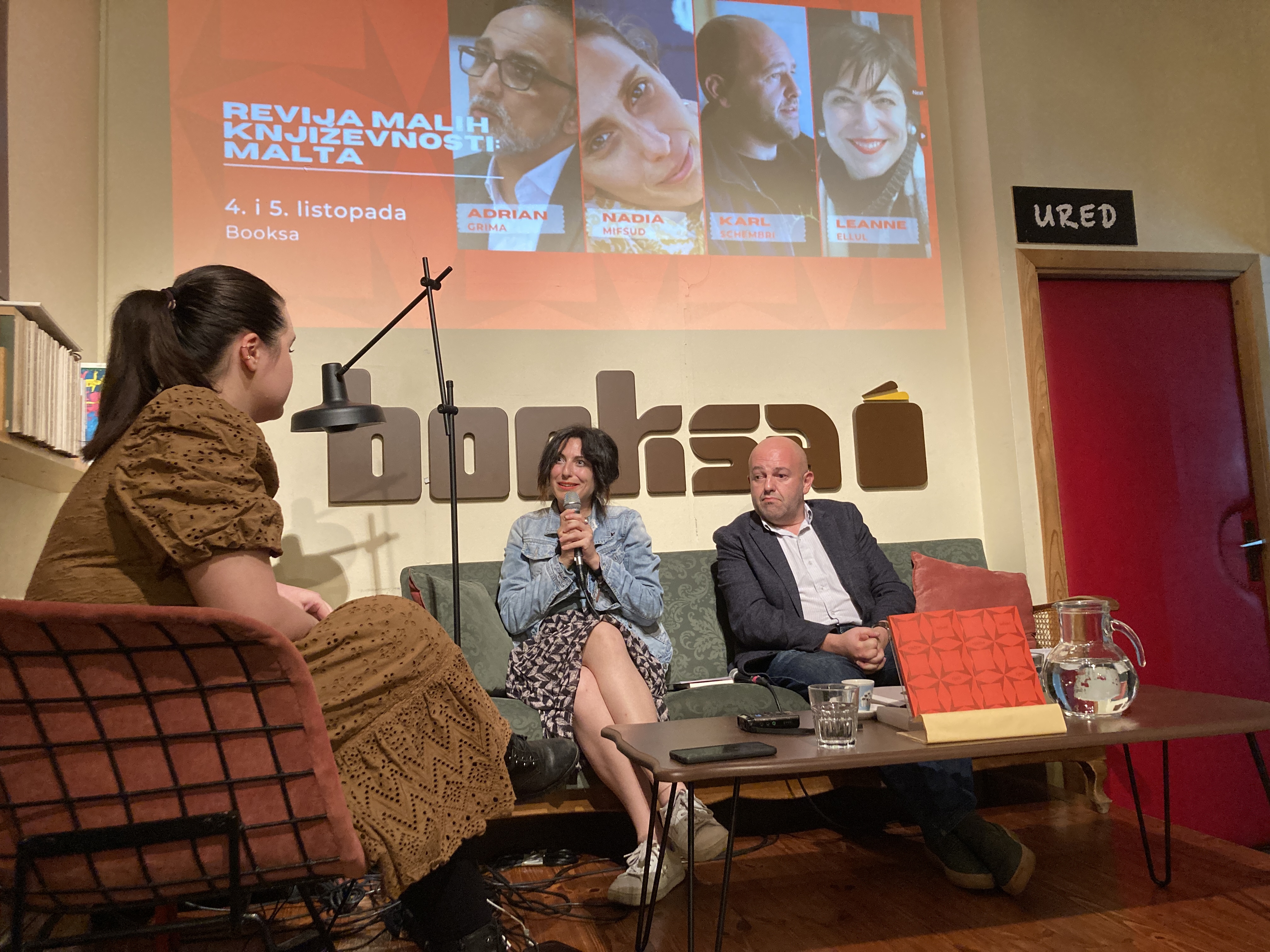


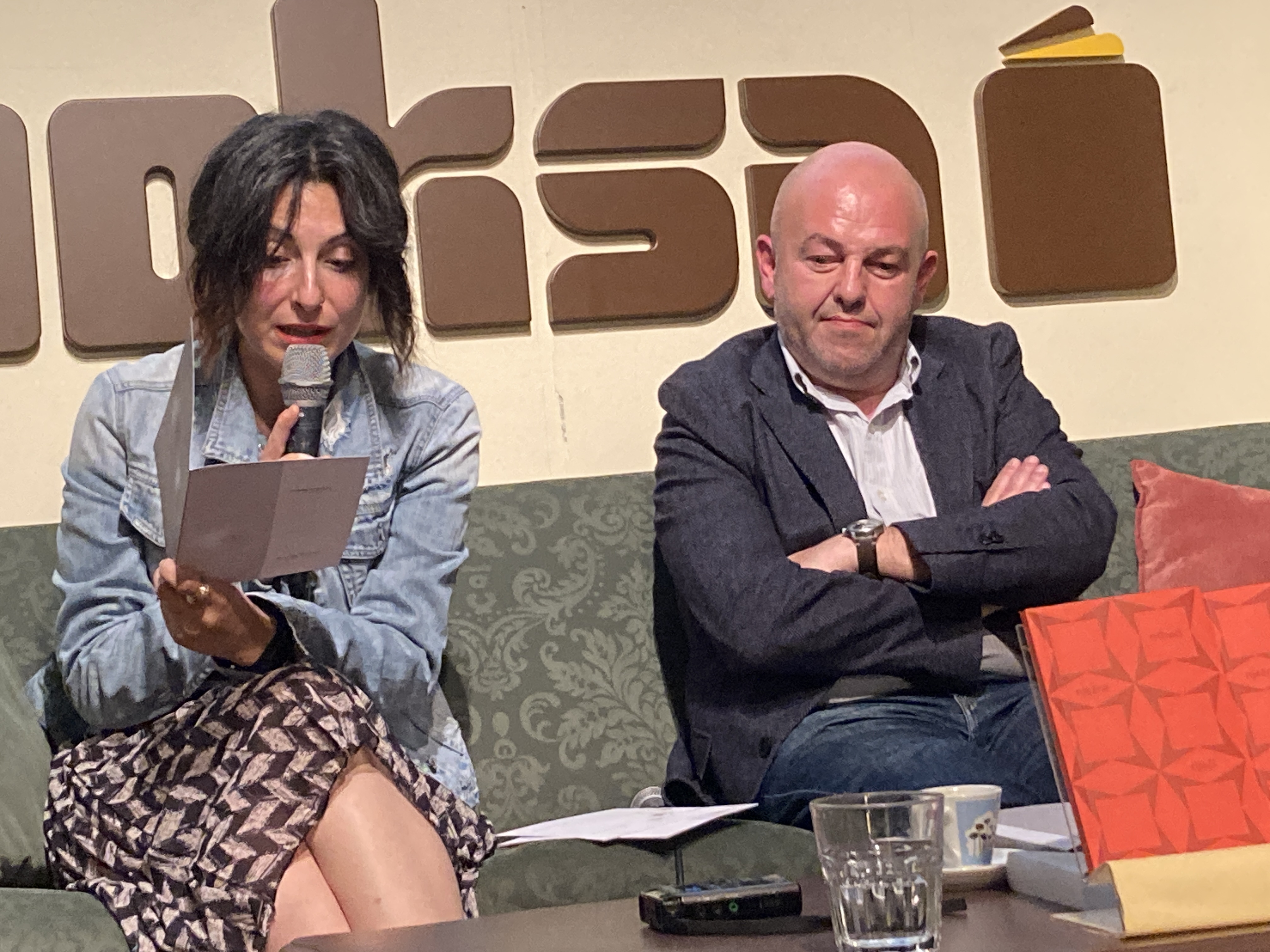

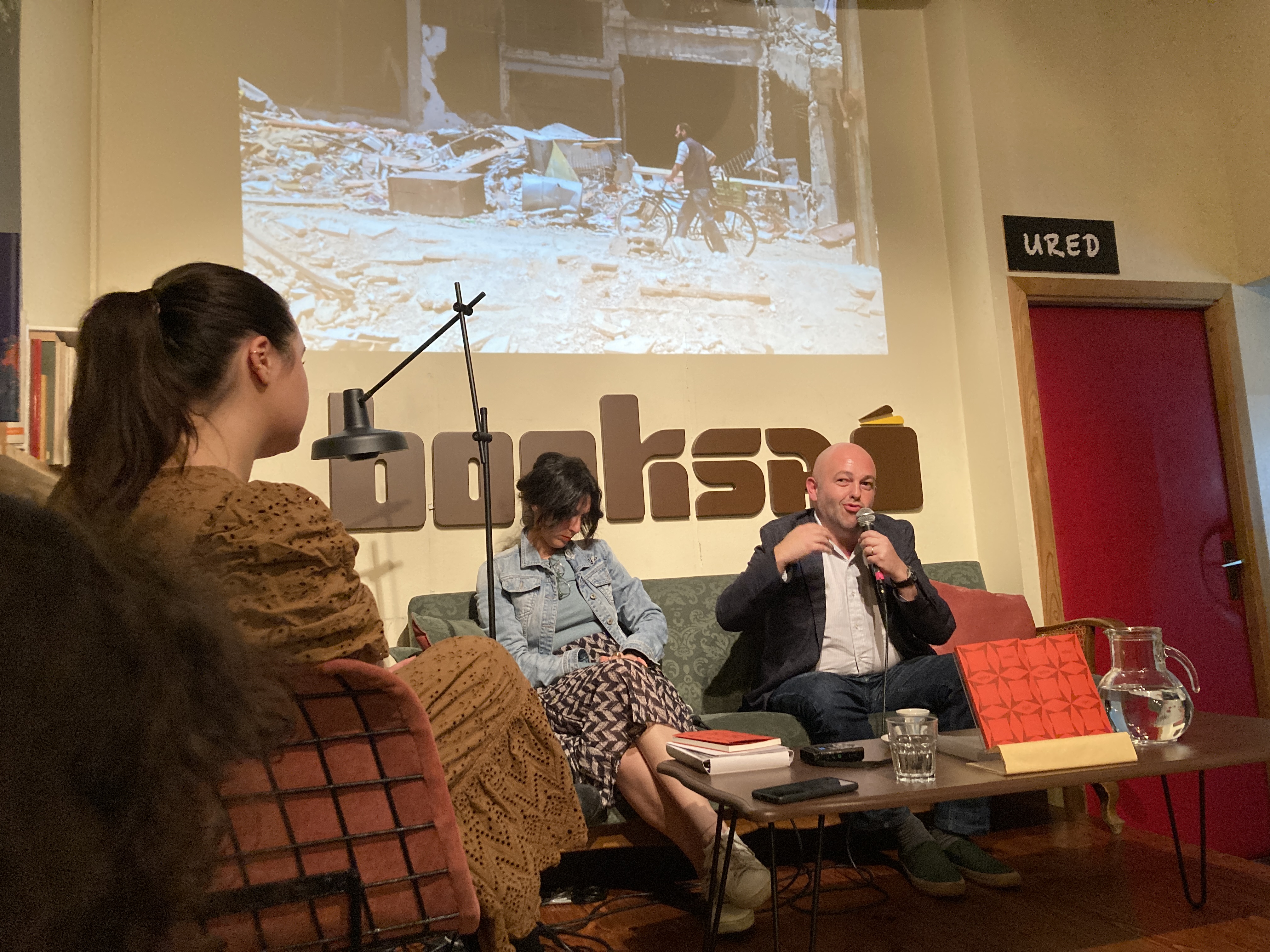



More pictures
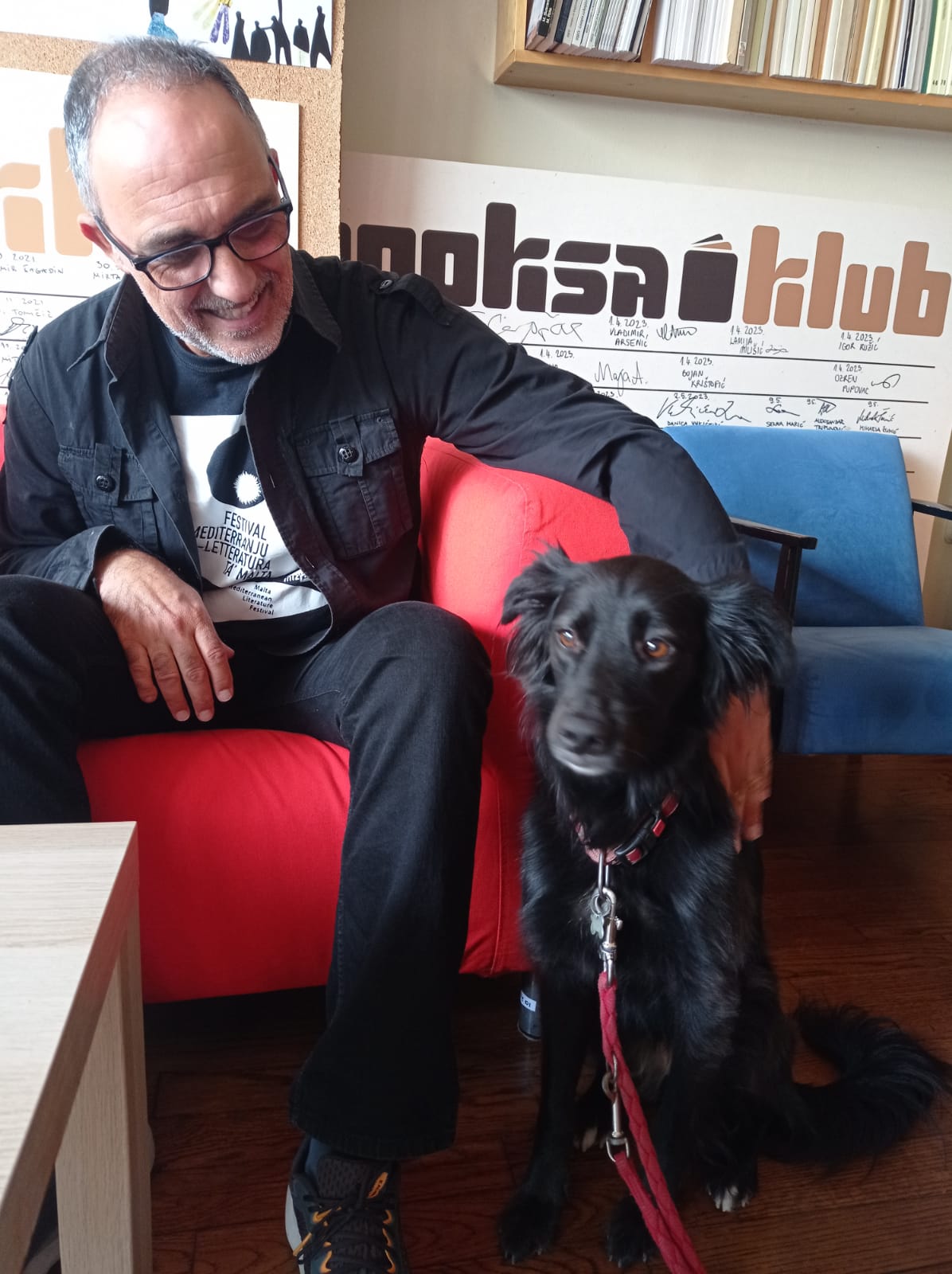

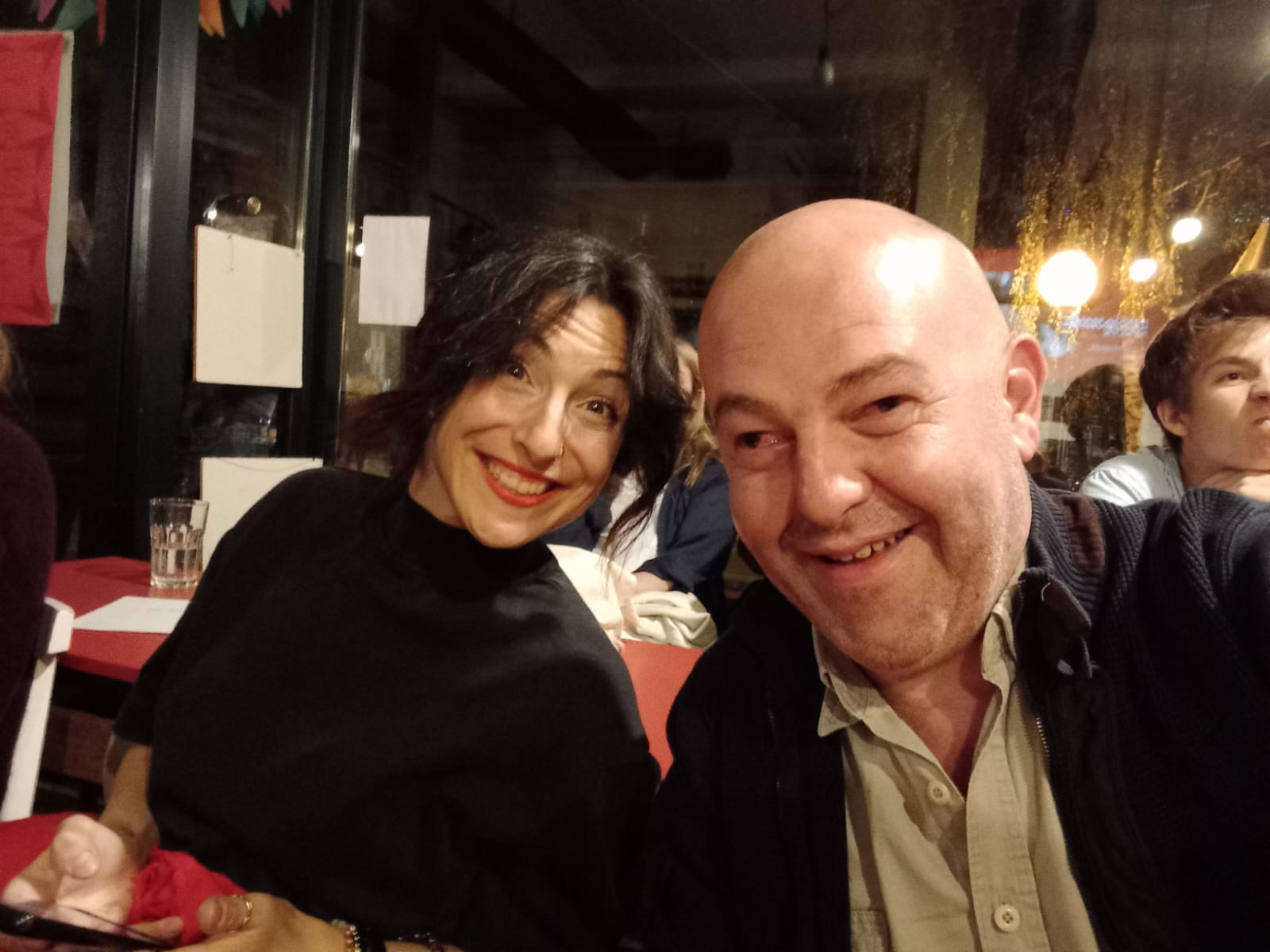
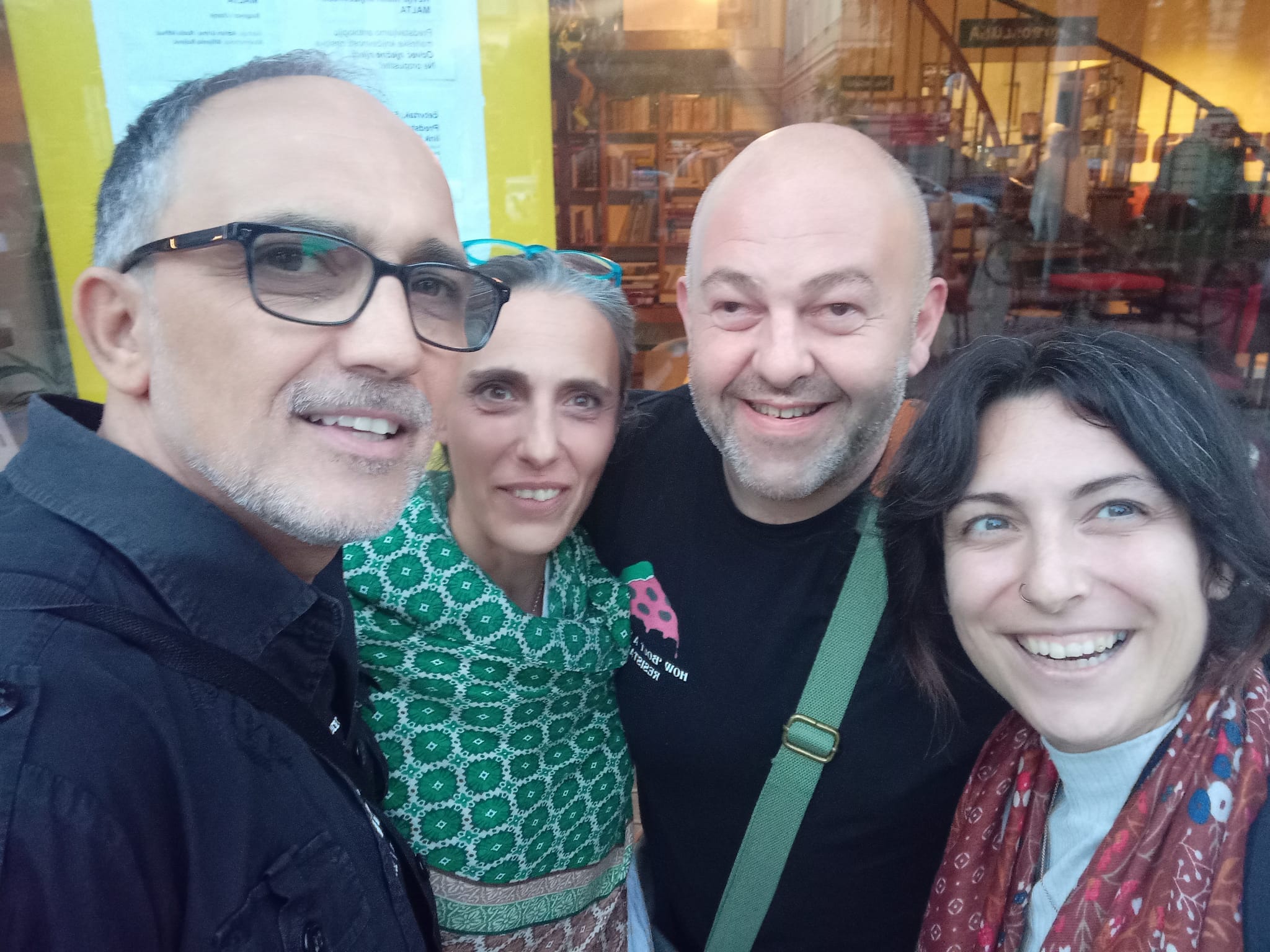


Review of Small Literatures
Review of Small Literatures is a festival whose primary goal is to throw light on the contemporary writers and national literary scenes that are unjustly neglected by the publishing industry in Croatia.

The festival is the only literary festival in Croatia to systematically introduce established foreign writers whose books have not been published in Croatian. The mission of the festival is to translate and bring before the Croatian live audience great writers who are not well known in Croatia either because they write in small languages, or because their writing is not commercial but artistic or in a specific genre and thus of less interest to publishers, or because they write in the context of a small country and have limited access to international literary scene.
The Festival began in 2005 and until now it has published and translated 126 writers from 13 countries. Until 2014 its focus was on the South East Europe. It hosted writers from Bosnia and Herzegovina, Slovenia, Montenegro, Bulgaria, Serbia, Romania, Kosovo, Greece, Macedonia, and Albania and published 10 separate anthologies.
From 2015 the Review of Small Literatures moved to the north of Europe and presented writers from Estonia, Latvia and Lithuania, while in 2016 it focussed on writers from the Netherlands, Luxembourg and Belgium. From 2017 to 2019 the Review presented Arab writers from the Mediterranean selected by Zeina g. Halabi. The translated writers were from Syria, Palestine, Jordan Lebanon, Libya, Morocco, Algeria, Tunisia, and Egypt.
Due to Covid restrictions, in 2020 the Festival translated indigenous writers from the North of Europe and Canada and organized the festival online, while in 2021 it commissioned new writing from Croatian writers and hosted them at the festival. In 2022 the Festival resumed its regular operation and presented 12 writers from Iceland selected by Sjón.
The writers are selected by literary experts from the invited country and the selection is made according to three basic criteria:
– writers must be established in their home country (receiving critical or public acclaim and relevant awards)
– their works must not be translated or published in Croatia
– they are at the beginning or in the middle of their career
The selector makes a selection of 8-10 writers per country and explains the selection placing it in a wider national literary context in an introduction to the festival book.
The Review of Small Literatures takes place in autumn in Zagreb and the readings take place in club Booksa.
The aim of the festival is not only to present writers and their texts to general audience but also to introduce writers to Croatian editors and publishers who might be interested in publishing their books so the meetings with professionals are organized during the festival and the anthology is distributed to these professionals. The anthology contains selected texts by the invited writers and represents an overview of contemporary writing. It disseminated to Croatian publishers, editors and journalists as well as made available in libraries and bookshops. Translated texts are also published on the web news portal for literature Booksa.hr and thus made available for the professional and general readership in Croatia and the Balkans. Booksa.hr has 25.000 unique visitors per month.
The festival is supported by the City of Zagreb and Croatian Ministry of Culture.

 adriangrima.org