
My chapter on “Landscapes of Revolution: Concetta Brincat’s 1919 Unpublished Novel” (pp. 144-55) was published in the proceedings of The Presidency Cultural Symposia Series. Malta and France: Shared Histories, New Visions (2022).
The symposium was held in May 2021 and was organised by the Office of the President of the Republic and the Embassy of France in Malta. My talk during the symposium on “Landscapes of Revolution in Paris and Malta, or In Search of a Lost Novelist,” is available here.
The book includes a number of official speeches, and the following chapters:
- Address by Ambassador of France
- Address by Minister of Foreign Affairs
- Address by State Secretary for European Affairs of France
- Relations between France and Malta in the Early Modern Period, Anne Brogini
- Sources in the French Diplomatic Archives, Nicolas Chibaeff
- A Critical Look at the Archives, Charles J. Farrugia
- Reasons for a Misunderstanding between Malta and France 1798, Alain Blondy
- Franco-Maltese Relations during British Colonisation: Markers of Memorial Collectivity, Charles Xuereb
- Parisian Illuminated Printed Books of Hours in Malta, Martina Caruana
- The Influence of French Military Engineers on the Maltese Architecture during the Reign of Louis XIV, Claude Busuttil
- Initiatives towards Franco-Maltese Relations in the Eighteenth Century, Carmen Depasquale
- Maltese Contemporary Musicians in France: Karl Fiorini, Simon Schembri (Musicians and Composers), Karsten Xuereb
- Three French Authors of Maltese Origin, Carmen Depasquale
- Maltese Migrations to France and French North Africa, Genevieve Falgas
- Landscapes of Revolution: Concetta Brincat’s 1919 Unpublished Novel, Adrian Grima
This is the opening paragraph of my study:
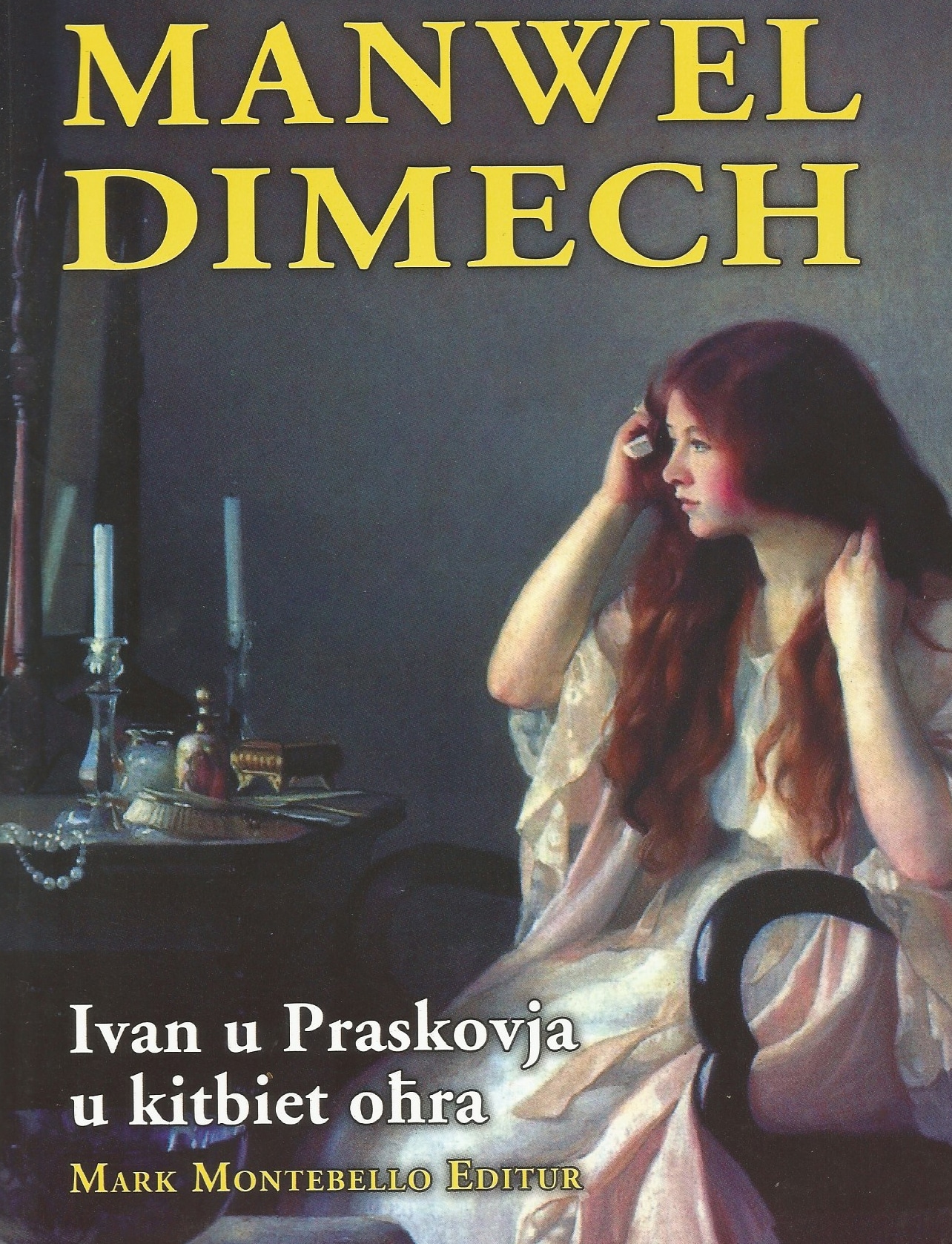
In 1919, a year of great social and political strife in Malta that culminated in the tragic Sette Giugno uprising, a 59-year-old mother of ten wrote a novel set in Paris during the French Revolution which has been waiting to be published for over a century. She spent most of her childhood in the city of Constantine in French colonial Algeria and returned to Malta in 1885 with an education that many of her compatriots in Malta were deprived of. Unlike Manwel Dimech’s novel Ivan u Praskovja (1905), Concetta Brincat’s Il-Familja de Valereux, jew Louis Mitluf Ġewwa l-Bosk is sympathetic towards the plight of the nobility hounded by gangs of uncouth and bloodthirsty French revolutionaries, and seems to be out of sync with what was happening in Malta at the time. Although she acknowledges the injustices suffered by the common people, her political ideology appears to be anything but revolutionary. However, there are aspects of the language and point of view of this novel, the first in Maltese by a woman writer, that are quite unusual and that call for a re-evaluation of the history of early Maltese literature. This re-evaluation depends heavily on whether Brincat was rewriting the work of a foreign novelist or whether she was developing her own distinct authorial voice.

 adriangrima.org
Thank you Adrian. This is quite interesting. Carmen